
 Available in US
Content
- How Cricket Markets Are Organised Around the Match Result
- Match Winner: The Spine of Cricket Sportsbooks
- Series Winner and Outright Tournament Markets
- Team Totals: Innings Runs Over/Under and Innings 1 vs 2
- Player-Specific Markets and What They Actually Settle On
- Session and Over Markets in UK Sportsbooks
- Combination Wagers: Accumulators, Bet Builders and Specials
- Why Some Markets Have Deeper Liquidity Than Others
- Risk Profile of Cricket Markets by Volatility
- Choosing a Market: Common Reader Questions
How Cricket Markets Are Organised Around the Match Result
When I started covering cricket for UK punters back in 2017, the average sportsbook ran maybe six markets on a Test match — match winner, top batter from each side, total fours, total sixes, top series run-scorer, toss. Today my watch list for a single India versus Pakistan ODI carries forty-three. The expansion is the story.
Every cricket market is, in some way, a satellite around the result of the match. That sounds obvious until you try to price one. Top batter pricing depends on where each batter sits in the order, which depends on the result-favoured tactic, which loops back into the win price. Innings totals shift when the match-winner line shifts. Even the toss market — superficially independent — gets repriced when the venue’s pitch report leaks, because the toss matters more on certain surfaces. So when you read a cricket coupon, you are reading a constellation, not a list.
The UK market itself is small enough that this constellation matters. Cricket betting in Britain is worth roughly £52 million a year, around 2.2 percent of the £2.37 billion online sports betting take. That is the size of one mid-table Premier League sponsorship deal. Inside that small pool, the heaviest liquidity sits on match winner, then on team totals, then on the toss and a handful of player markets. The further you drift from match winner, the thinner the book, and the more cautious you need to be about the prices you see.
I am going to walk through the architecture the way I teach it to new analysts on my desk: spine first, then the markets that hang off the spine, then the markets that exist only because the spine is interesting. Every block has a worked example because cricket markets do not survive abstract description.
Match Winner: The Spine of Cricket Sportsbooks
Test cricket has three outcomes. T20 has two. That single fact rewires the entire pricing logic of the match winner market, and almost no UK newcomer notices.
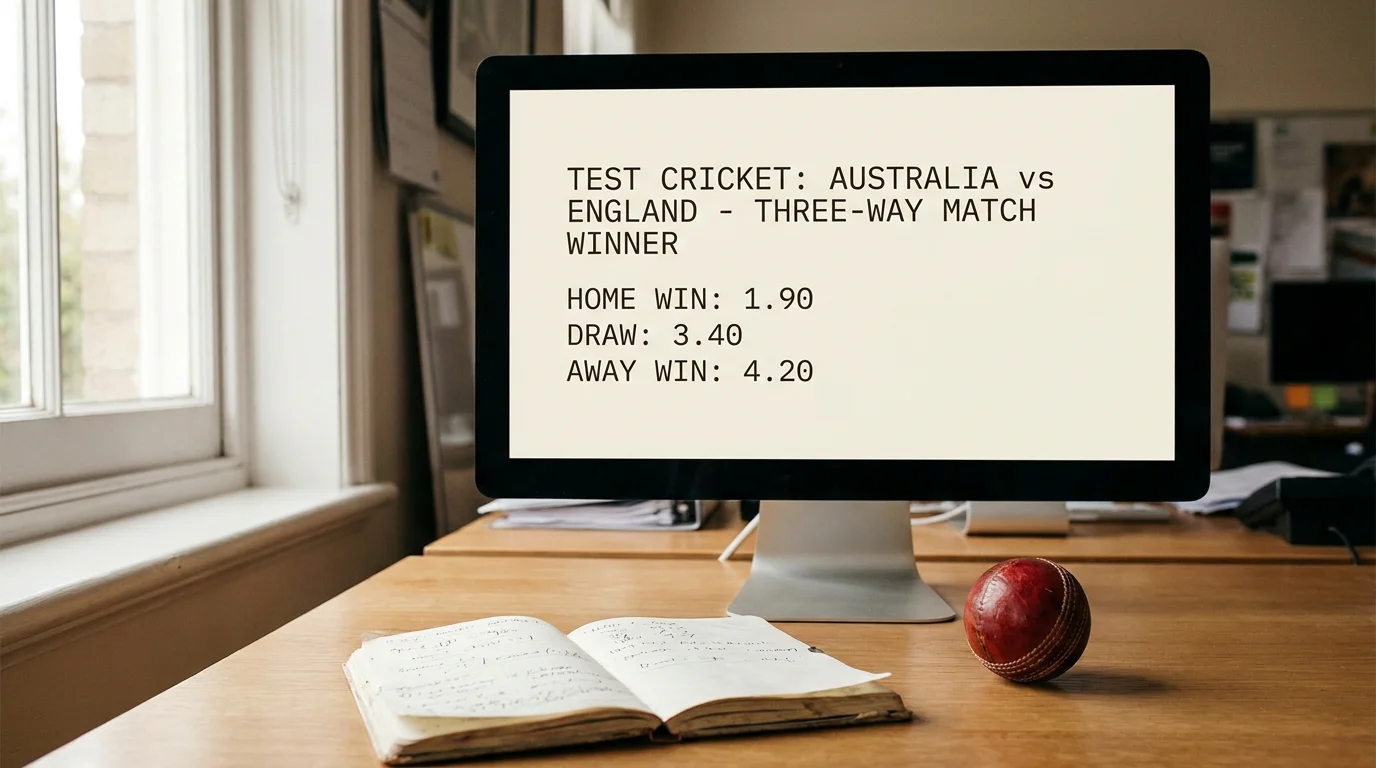
In a three-way Test market — home win, draw, away win — the draw is not a courtesy line. It is a fully priced outcome that often carries the shortest odds in the book on day four with both sides level on first innings runs. I have seen draws priced at evens or even odds-on in well-set Tests, and yet I still find punters who skip past the draw column because it feels like a hedge. It is not. It is the most accurately modelled outcome the book offers, because Test draw rates are stable across decades.
Limited-overs match winner is a different animal. ODIs and T20s are priced as a two-way book, with the operator’s margin baked into the gap between the two implied probabilities. A team at 1.80 in decimal does not represent a true 55.5 percent chance — it represents a price that includes the house edge. Read both sides together. If India is 1.80 and Pakistan is 2.10, the overround works out to roughly 4 percent, which is normal for headline white-ball matches on a UK-licensed book.
Settlement is where rookies get surprised. A no-result — match abandoned before the minimum overs are bowled — voids the match winner book and returns stakes, but only if the operator’s rules treat the match as void. Some books settle on a Duckworth-Lewis-Stern adjustment if a result is declared after a stoppage. Read the rule before you stake. The other detail to know is the rare “tie” outcome in limited-overs cricket: most UK books offer dead-heat settlement on a tied match — half-stake at the price of the team you backed — unless a super over decides the result, in which case the official winner takes the market.
The most common mistake I see on match winner is assuming the price you click is the price you get on the slip. In rapid pre-match trading, prices can shift between selection and bet placement. UK consumer rules require the slip price to be the agreed price unless the book has triggered an explicit price-flash refresh. Always confirm.
Series Winner and Outright Tournament Markets
Would you take 6/4 on India to win a five-Test series after two drawn matches? Most punters say no without thinking. They are often wrong, because they are pricing the series like a single match. It is not a single match — it is three more chances.
Series winner markets cover bilateral tours of any length, and the standard UK structure offers three outcomes for an odd-numbered series — Team A, Team B, drawn series — and the same three for an even-numbered series, with “drawn series” meaning the trophy is shared. The Ashes is the headline UK example, but the pattern repeats for England’s home and away tours, India’s bilateral programme, and every other multi-Test commitment. I price these by simulating the remaining matches against the current state of play, not by leaning on pre-tour assumptions.
Tournament outrights — ICC World Cup, the IPL, The Hundred, the T20 World Cup — are a different exercise. Here the operator is pricing a winner from a field of eight to twenty teams, often with multiple knockout layers. Margins are wider because the variance is enormous, and the line on the favourite is rarely value once the group stage begins. I find more edge in tournaments by looking at the second and third favourites once two rounds have been played and the favourite has shown a weakness the book has been slow to digest.
Settlement timing on tournaments is the detail that catches people. The Hundred 2025 final pulled 580,000 tickets across the competition and a cumulative live audience above 2.5 million since 2021 — and outright markets settle only after the trophy is lifted. If a team is mathematically champion with a match to spare, your stake is still live until official confirmation. Cash-out values change accordingly. I rarely cash out a tournament outright once a team is mathematically through, because the marginal house edge has already shrunk and the price improves on each remaining match.
A note on dead-heat rules in outrights. If two teams finish level on points and the tournament rules use net run rate as the tiebreaker, your stake settles on the official table. If the rules allow a shared title — rare in modern cricket but still possible in some bilateral trophies — dead-heat settlement applies, and half your stake is returned at the original price. Read the small print before tournaments where the format permits ambiguous finishes. The toss in any of these matches sits behind its own market with its own quirks, which I cover in more depth in my analysis of the toss winner market.
Team Totals: Innings Runs Over/Under and Innings 1 vs 2
Australia were 287 for four after seventy overs at the Gabba. The over/under on first-innings runs sat at 380.5. The book had a model for what those last twenty overs typically produced. Did you?
Team totals are the second-most-traded family of markets in UK cricket sportsbooks after match winner. The structure is simple — over or under a published line, often offered at every fifty-run interval for Test cricket and every five or ten runs for white-ball formats. The trap is that the line moves continuously in-play, and the only honest way to play it is with a clear view of where the model’s expected total sits.
For a Test innings, the expected total is a function of pitch behaviour, current run rate weighted by the rate of wickets falling, and the remaining batting order’s historical conversion. White-ball totals are simpler in structure but harder in practice because variance is higher. A T20 total of 165.5 is essentially a coin flip in many conditions, which is why the typical margin baked into those lines is wider — operators are pricing genuine uncertainty, not just protecting against sharp money.
Innings 1 versus Innings 2 totals are the most under-loved limited-overs market. The book is essentially asking which team will post the higher score, and dew, second-innings batting conditions, and chase psychology all play into it. In day-night ODIs at Asian venues, the second-innings team historically batted under easier conditions because the ball lost some of its lacquer overnight, but white-ball innovation has narrowed that edge. I price Innings 2 totals separately from match winner because the chasing team’s tactic — bat to a target rather than maximise — depresses their expected total even when they win.
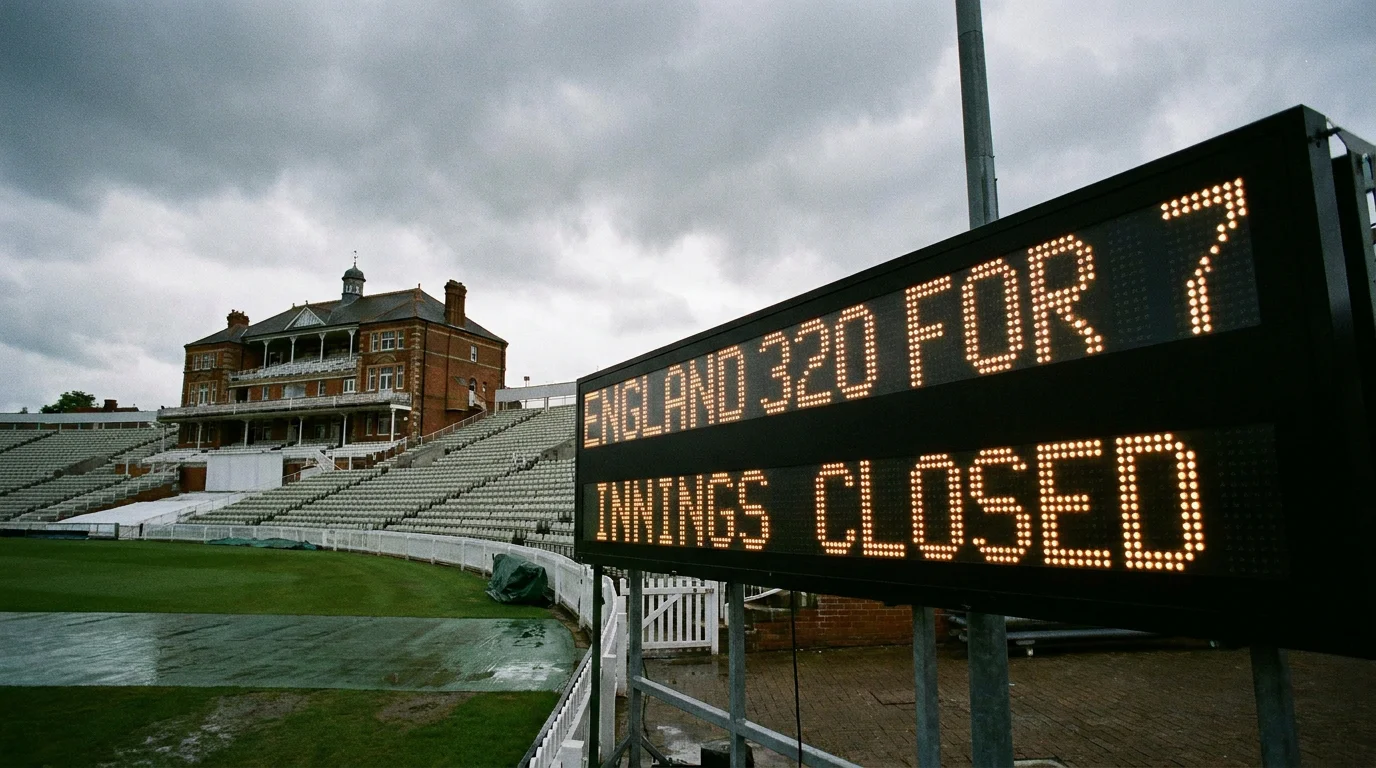
One settlement detail that catches new punters: if a Test innings is declared, the team total at the point of declaration is the settled figure. A team going off at 530 for nine when the captain calls them in has 530 as its innings total, not the maximum a tenth wicket might have added. The same applies to a forfeited innings — settled at zero, and yes, that has happened in Test history.
Player-Specific Markets and What They Actually Settle On
The first time I saw a top-batter coupon I assumed it covered the whole match. It did not — it covered the first innings of the team I was betting on, and my “top batter” finished second in the team’s second innings while a tail-ender swung his way to a quick fifty in innings one. The book paid out on the tail-ender. I have read every settlement clause carefully ever since.
Player markets break into four buckets: top batter (highest individual score), top bowler (most wickets in a team innings), milestone markets (player to score fifty, player to score a century, player to take three wickets), and prop totals (a named player’s runs over/under, a named player’s wickets over/under). Each settles on a precisely defined event, and each carries quirks that punish casual reading.
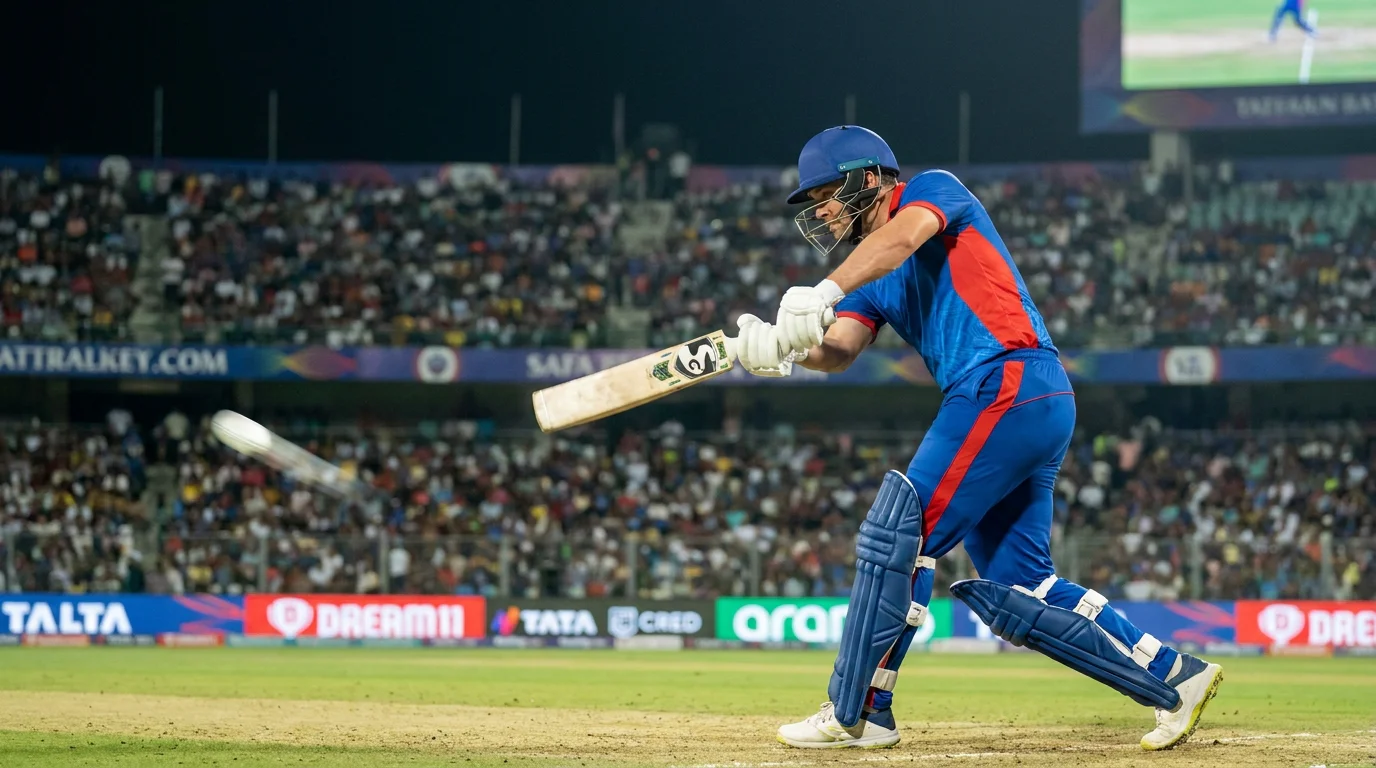
Top-batter markets settle on the highest score for a named team in a named innings. If the market specifies “first innings”, and your batter scores zero in the first innings and 187 in the second, you have lost. If two batters tie on the highest score, UK dead-heat rules apply — half your stake at the original price — unless the book offers a “tied result” specific clause, which is rare. Eligibility almost always requires the batter to face at least one ball; a batter named on the team sheet who is left not out without facing because the innings closed on a teammate’s score does not qualify.
Top-bowler markets carry their own settlement rules. The market usually settles on most wickets, with the bowler’s economy as a secondary tiebreaker, then strike rate, then alphabetical order of surname. A bowler who does not bowl an over is excluded — relevant in Tests where a captain may decline to use a fifth bowler, but also relevant in rain-shortened T20s where the bowler you backed never gets a turn at the crease.
Prop totals — “Joe Root over 49.5 runs” — settle on whatever the named player actually does, with one important caveat. If the player is omitted from the team sheet entirely, most UK books void the bet and return the stake. If the player is named but does not bat — because his team chased the target before his turn came up — most books settle on his actual score, which is zero. That asymmetry surprises punters. I always check the operator’s rule on “did not bat” before staking on a middle-order batter in a chase.
Milestone markets — “any batter to score a century” or “player X to score a fifty” — pay out yes/no at fixed prices. They are the cleanest player markets to read because there is no tiebreaker. They are also the markets with the widest house margin in my experience, sometimes north of 8 percent, because variance is enormous and the book has to protect itself.
Session and Over Markets in UK Sportsbooks
The over-runs market on the third over of a T20 innings sat at 9.5. The opening pair had been pinned down on a slow pitch, and the next over was the first by a left-arm spinner. I bet the under at 5/6 and watched the batters slap-sweep him for fourteen. The market closed at five runs. I had been right about the matchup and wrong about the line. That is session betting in one paragraph.
Session markets in UK sportsbooks split into limited-overs over-runs (runs in a named over) and Test-cricket session totals (runs scored between scheduled breaks). The two markets behave like distant cousins — both are “runs in a fixed time window”, but the variance characteristics are completely different.
Limited-overs over-runs settle on a single over’s output, with the operator setting a line — usually between four and twelve runs in T20 or ODI cricket — and pricing over/under. Powerplay overs carry higher lines because field restrictions favour the bat. Death overs in a T20 chase carry the widest variance and often the widest house margin. The classic mistake is treating the line as the median outcome; for any given over the distribution has a long right tail (a six is six runs in one ball), which is why “over” lines are priced more cautiously than they look.
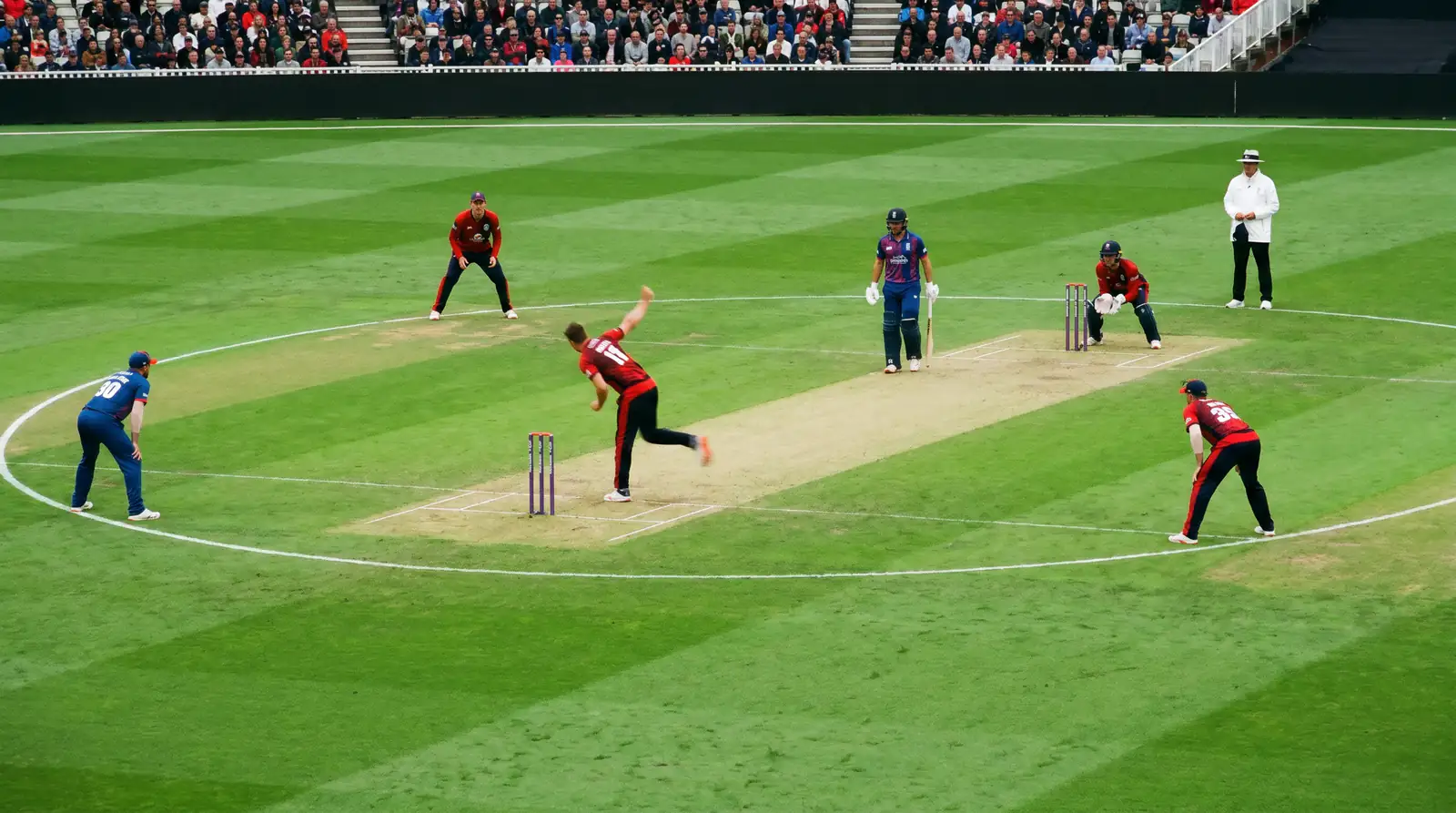
Test session totals are a slower game. Books typically offer runs in the morning, afternoon, and evening sessions, with lines set against the historical session-rate for the venue, weather, and current state. These are among the few cricket markets where genuine, modellable edges still appear in UK books, because the operators price them off generic historicals and a sharp punter who tracks venue-specific session-by-session run rates can identify mispricings. I do not pretend this is easy — the volume on Test session markets is thin, and books move quickly when they see one-sided action.
Powerplay totals — runs in the first six overs of a T20 or first ten of an ODI — are a hybrid. They behave like a session market in that they cover a defined window, but they are priced like an over total because the variance is high. Settlement is straightforward: total runs scored, including extras, in the defined overs. If the innings ends before the powerplay is complete because the team is bowled out, most UK books settle on actual runs scored up to that point, not voiding the bet.
A specific settlement detail to know: if rain reduces the innings to fewer than the scheduled powerplay overs — say, the innings is shortened to five overs — many books void the powerplay runs market because the underlying window no longer matches the bet. Other books settle on actual runs in the reduced window. The rule varies, and reading the operator’s small print before staking is the difference between a winning ticket and a void slip.
Combination Wagers: Accumulators, Bet Builders and Specials
I once watched a bet builder grow from a sensible three-leg single match selection into a seven-leg monster covering wickets, runs, top batter, top bowler, first-innings lead, partnership, and method of dismissal. The punter who showed it to me on Twitter wanted me to confirm the price. I told him the price was honest but the bet was not. He took it anyway. The bet builder lost on leg six.
Combination wagers cover three product families in UK cricket sportsbooks: accumulators (independent selections across matches at multiplied combined odds), bet builders (multiple selections in the same match, priced as a combined ticket), and specials (request-a-bet or operator-curated combination prices).
Accumulators across cricket matches are mathematically efficient when the selections are genuinely independent. The classic example is two match winners across two different ODIs played on the same day. Multiply the decimal odds, deduct the operator’s margin on the combined price, and you have a clean accumulator. The error punters make is correlating their legs without realising — backing India and Australia to win on the same day when both are heavy favourites against weaker opposition is fine; backing India to win and India’s top batter to score a fifty is correlated, and standard accumulator pricing on a UK book will not capture the correlation correctly.
Bet builders are the response to that correlation problem. A single-match builder lets you combine same-match selections, and the operator’s pricing engine adjusts for the conditional probability between legs. If you select “India to win” and “Indian top batter to score 50”, the builder shortens the second leg’s effective price because the conditional probability of the top batter scoring fifty given India winning is materially higher than the unconditional probability. The price you see is the joint price after that adjustment.

The trap with builders is that the more legs you add, the higher the implicit margin on the ticket. Every leg adds the operator’s per-leg edge, and combining six or seven legs in a single match produces a ticket with an effective margin that can exceed 15 percent. Two-leg and three-leg builders are economically reasonable. Seven-leg builders are a recreation tax. I tell readers this often: short builders are products, long builders are entertainment.
Specials and request-a-bet markets are operator-curated combinations posted in the day’s coupon. Their margin is opaque because you cannot decompose them into individual leg odds, but they are often the only way to back exotic combinations — “England to win, top batter to be Joe Root, and the match to last more than four days” — that the standard builder cannot construct. Use them when the combination is genuinely your view, not because the price looks generous.
Why Some Markets Have Deeper Liquidity Than Others
Liquidity in cricket markets is not random. It is a function of audience, model confidence, and integrity scrutiny. The IPL final pulls more UK turnover than three County Championship matches combined, even though one is happening overseas and the others on the doorstep.
The IPL is the extreme case. The 2025 edition pulled a cumulative live audience above one billion viewers globally and generated more than 840 billion minutes of viewing, with digital up 29 percent year on year. UK sportsbook turnover follows that audience. Match winner, top batter, top bowler, and team totals on IPL fixtures carry deeper books than equivalent markets on bilateral ODIs between mid-tier sides. The depth means tighter margins, faster price corrections, and lower house edge.

The Hundred sits behind IPL in UK turnover but ahead of the County Championship by a wide margin, primarily because the format is purpose-built for short-attention broadcast and the BBC App alone reached 1.3 million live viewers for the 2025 final. County Championship four-day matches carry the thinnest markets in mainstream UK cricket — sometimes only match winner and a basic outright, with no player props.
The UK Gambling Commission has formally articulated why this matters beyond the punter’s interests. As the regulator has noted in its integrity guidance, sport and sports betting rely upon high standards of integrity, and match-fixing and related betting corruption undermines the ethos, reputation and commercial viability of sports and betting businesses. The implication for liquidity is direct: operators concentrate liquidity on competitions where integrity monitoring is robust, and they thin or withdraw markets where suspicious activity is identified.
For the punter, the practical effect is that deep markets are usually the safer markets to play. Tight margins, faster price discovery, and active integrity monitoring all favour you. Thin markets are riskier in two senses — wider margins eat your value and less monitoring means more variance in the unobserved factors. I rarely stake serious money on a market with shallow book depth, regardless of how attractive the price looks on screen.
Risk Profile of Cricket Markets by Volatility
If you ranked every cricket market on a single axis of variance, you would get a curve that looks nothing like the popular intuition. The toss is not the most volatile market. Match winner is not the most stable. Most punters get this backwards.
Match winner on a five-day Test is, statistically, one of the lowest-variance markets in cricket because it has three outcomes and information accumulates slowly across five days. The book has time to be right. The toss is binary and a coin flip, which sounds volatile but is in fact the lowest-variance market in the entire coupon — you have a known 50 percent base rate, and the operator’s job is just to extract margin around that.

The highest-variance markets are method-of-dismissal props, milestone markets, and exotic specials. Method-of-dismissal — “next wicket to fall by LBW” — is a low-base-rate event with strong contextual dependencies. Milestone markets are bimodal: the player either reaches the milestone or does not, with limited middle ground. Exotic specials combine multiple low-probability events and are essentially lottery products with a price tag.
Where this matters is staking. I size positions on match winner and team totals at meaningful fractions of my bank. I size positions on method-of-dismissal at a tenth or less. This is not because I have a stronger view on match winner — it is because the variance of method-of-dismissal eats consistent staking alive, and the only way to survive the market is to accept that most tickets miss and to size accordingly.
There is a second risk dimension that the variance lens misses: integrity risk. The International Betting Integrity Association recorded 300 suspicious betting alerts in 2025 across all sports, a 29 percent increase on 2024’s 219. Cricket specifically saw 59 suspicious matches flagged by Sportradar in 2025, the highest in years. The markets most often implicated are session totals and over-runs in short-format cricket, particularly in lower-tier T20 leagues. I avoid those markets in unfamiliar competitions for that reason alone, and I would urge any reader doing serious volume in cricket markets to internalise the same rule.
Choosing a Market: Common Reader Questions
What follows is the four-question version of a longer FAQ. These are the questions I get most often from new analysts on my desk and from readers who write in after my weekly column.
Which cricket markets have the lowest house margin?
Match winner on headline white-ball internationals and top-tier T20 leagues typically carries the lowest margin, often in the 3 to 5 percent range for the two-way book. Team totals on the same fixtures are next. Milestone markets, method-of-dismissal markets, and operator specials carry the widest margins — sometimes north of 10 percent — because variance is high and operators price to protect themselves.
Are ‘Tied Match’ and ‘No Result’ the same market in UK sportsbooks?
They are not. A tied match is a legitimate sporting outcome — both teams end on the same total in a limited-overs match — and operators price it as a third-way market in addition to the two-way match winner book, or settle dead-heat where it is offered. A no-result is an abandoned match before the minimum overs are bowled and the result cannot be decided; operators void the match winner market in that case and return stakes. Always check the operator’s rule before placing the bet.
How do bet builders settle when a market is voided?
If one leg of a bet builder is voided — for example, the player named did not feature, or rain forced the underlying market to be settled void — most UK operators recalculate the remaining builder at the price of the remaining legs only, treating the voided leg as a successful selection at odds of 1.00. The full builder is not voided unless all legs are. Check the operator’s rule, because a small minority of books void the entire builder if any single leg cannot be settled.
What happens to player markets if a batter does not bat?
If the batter is named on the team sheet and the innings closes before his turn — for example, his team chased the target with overs remaining — most UK operators settle the player’s prop at his actual score, which is typically zero. The bet is not voided. If the batter is omitted from the team sheet entirely, the bet is voided and the stake returned. The rule on ‘did not bat’ varies between books, and is the single most common source of complaints I see, so always read the rule before staking on a middle-order batter.
