
 Available in US
Content

The Number Bookmakers Don’t Print on the Slip
The overround on a cricket betting line is the most important number on a sportsbook screen, and the only one the operator never displays. I find that fact endlessly revealing. It tells you exactly how much commercial pressure exists around presenting margin transparently, and the answer is “less than zero”.
Overround is the sum of implied probabilities across every outcome of a market, expressed as a percentage above 100. A market priced with no margin would sum to exactly 100 per cent — every pound staked in proportion to true probability would return to the punters as a whole, with the bookmaker breaking even. No legitimate operator runs a no-margin book. The overround is how the sportsbook gets paid, and it sits silently inside every cricket price on every screen in the country.
Once you can calculate overround in your head from a displayed market, you can rank sportsbooks by how punter-friendly they really are. Marketing copy doesn’t tell you that; arithmetic does.
Calculating Overround on a Cricket Match
The calculation takes about thirty seconds and never gets more complicated than basic arithmetic. I’ll walk through a typical T20 example.

Take a T20 international with two outcomes: Team A at 4/6 and Team B at 11/8. Converting to decimal, that’s 1.67 and 2.375. Implied probabilities are 1/1.67 (about 60.0 per cent) and 1/2.375 (about 42.1 per cent). The sum is 102.1 per cent. Subtract 100, and the overround is 2.1 per cent — the sportsbook’s structural margin on this market.
For three-outcome markets like a Test match, add the draw price into the calculation. Team A at 5/4 (2.25 decimal, 44.4 per cent implied), Team B at 7/4 (2.75 decimal, 36.4 per cent implied), draw at 5/2 (3.50 decimal, 28.6 per cent implied). Sum is 109.4 per cent — a 9.4 per cent overround, much higher than the T20 line. That gap is exactly what makes Test betting structurally worse-value than T20 betting on most UK books.
For exotic markets with five or six outcomes — top batter, top bowler, method of dismissal — the overround can balloon to 20 per cent or higher because each additional outcome adds another margin tick. This is why I treat short-form match-winner markets as the cleanest expression of value and treat player props as recreational by default.
Overround Levels Across Cricket Markets
Different markets carry wildly different overround levels, and the variance across operators on the same market is wider than most punters realise. The pattern is consistent enough that I keep a small reference table updated each season.

Match-winner on a major international fixture: 102-105 per cent at the tighter UK operators, 105-108 per cent at recreational-focused books. The William Hill brand captured 37.83 per cent of UK sports betting PPC clicks in early 2026, and together with Bet365 commanded more than 50 per cent of search click share — that scale lets them run tighter overround on heavily traded markets because the volume pays for the slimmer margin.
Top batter: 115-125 per cent. Top bowler: similar. Method of dismissal: 130-150 per cent depending on the number of outcomes offered. Session totals: 108-115 per cent. Over/under team total: 105-112 per cent. The pattern is that the longer the field of outcomes and the lower the liquidity, the wider the overround. That’s not a coincidence — it’s the explicit pricing strategy.
The integrity dimension matters too. Andreas Krannich, Sportradar’s Executive Vice President for Integrity Services, put the context for vigilance succinctly in the Integrity in Action 2025 report: “The relative stabilisation of suspicious match numbers in 2025 is encouraging, yet it reinforces the importance of continued vigilance. Match-fixing remains an evolving threat.” Higher overrounds on lightly traded markets aren’t only about commercial margin — they also reflect the operator’s risk discount on markets with thinner integrity oversight.
Margin by Format: Test vs Limited-Overs
The format dimension is the second axis on which overround varies meaningfully, and it surprises me how few cricket punters factor it into shopping decisions.
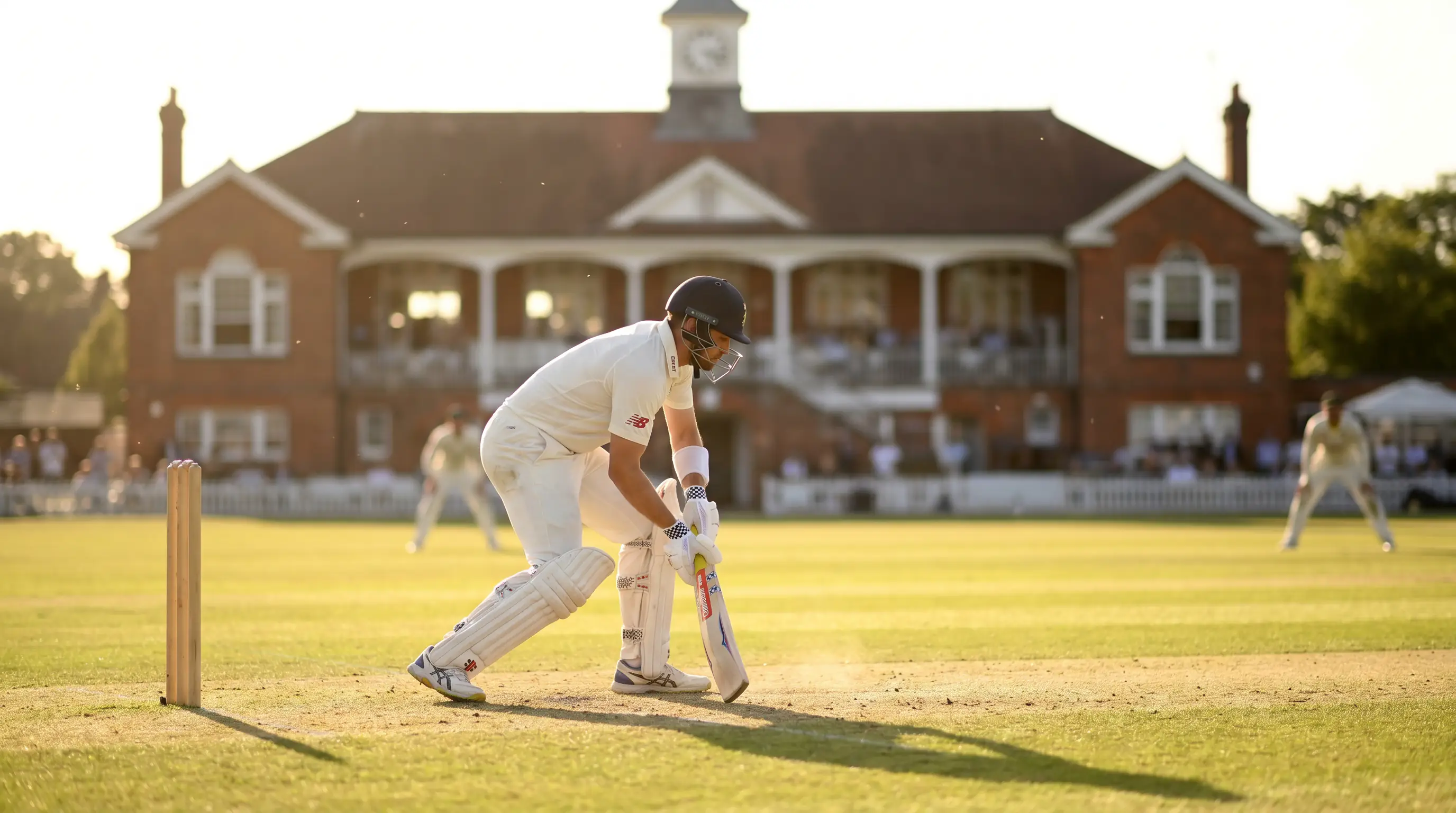
Test cricket overrounds sit higher than T20 overrounds at the same operator on a like-for-like fixture comparison. The reason is structural: Test cricket has three possible outcomes (home win, away win, draw), and pricing three-outcome markets is inherently harder than pricing two-outcome markets. The bookmaker compensates with wider margin, because their forecast for a draw is structurally more uncertain than their forecast for either team winning.
T20 cricket carries the tightest overrounds in the format world. The two-outcome match-winner market is sharp, liquidity is heavy during the major franchise windows, and competition between books on the headline price is brisk. I see 102 per cent overrounds on the major IPL fixtures with regularity — that’s nearly no-vig pricing.
ODI sits in between, leaning toward the T20 pattern on the major bilateral series and toward the Test pattern on lower-profile fixtures. The Hundred, despite being a short format, often carries slightly wider overrounds than T20 because the format is still maturing and liquidity hasn’t fully stabilised across the eight franchises.
The County Championship is the worst-priced market in UK cricket from an overround perspective, frequently sitting at 110 to 115 per cent on the major operators because liquidity is thin enough that the book can’t compete on price.
How a UK Punter Uses Overround Practically
The most practical use of overround calculation is shopping. With the UK remote betting market generating £16.8 billion in gross gambling yield in 2025, the volume that flows through major UK sportsbooks gives serious punters real choice between operators on most fixtures.
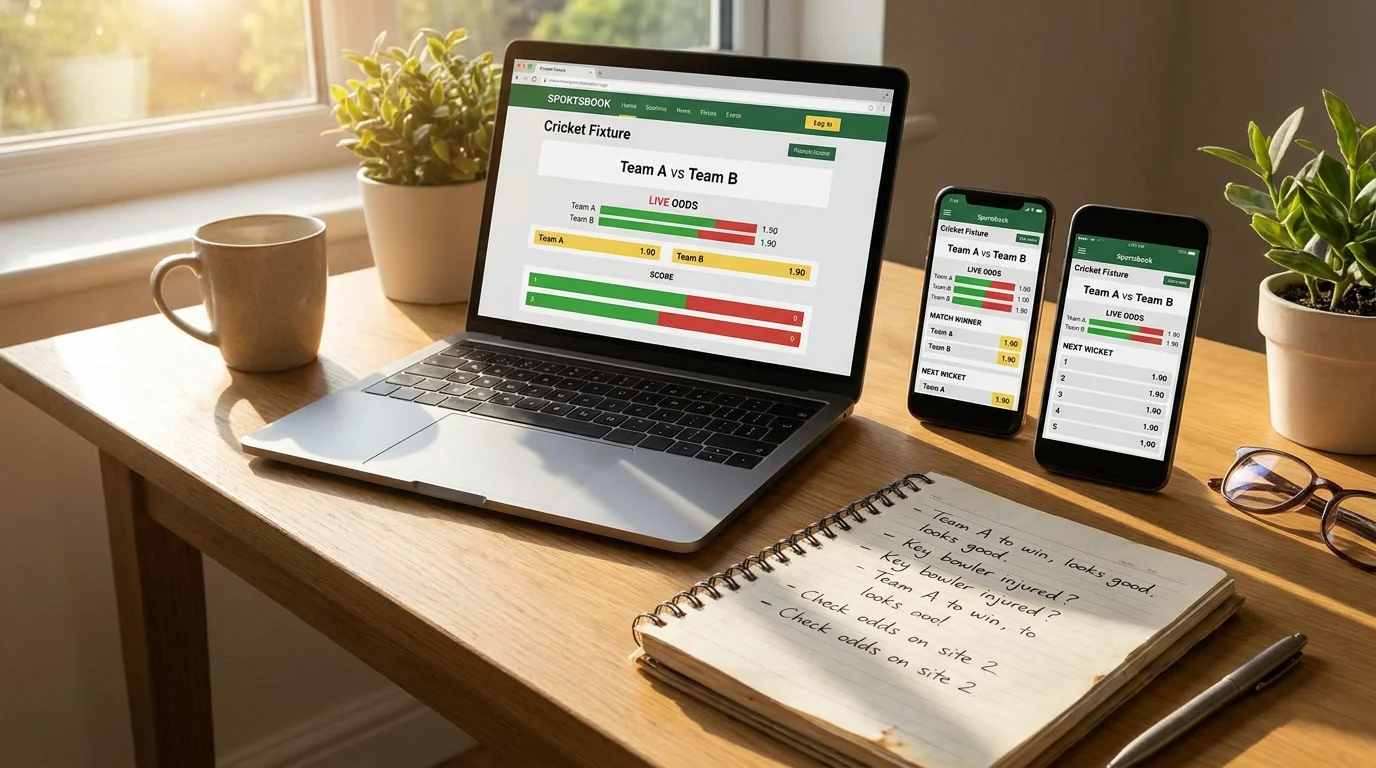
My personal workflow is to calculate overround on the match-winner market at three or four sportsbooks before placing any serious wager. The operator with the lowest overround on that fixture is the right place to stake. Over a season, a punter who consistently bets at 102 per cent overround instead of 108 per cent has saved themselves 6 per cent of total turnover — meaningful money over hundreds of bets.
The second use is filtering out structurally bad markets entirely. Any cricket market with overround above 115 per cent goes onto my “recreational only” list — that includes most player props and exotic specials. Serious value-seeking stakes go onto the tightest-priced headline markets. For converting that overround insight into actual value identification on individual selections, the value bet framework is the natural next read.
Margin and Overround Questions
Two follow-up questions on overround come up most often in reader correspondence.
Is a lower overround always better for the punter?
In a direct head-to-head comparison on the same market, yes. The lower the overround, the more of the true probability is being passed through to the punter in the displayed odds. However, comparing overrounds across different markets is less straightforward — a 105 per cent overround on a heavily traded T20 match-winner is structurally tight, but the same 105 per cent figure on a five-outcome player market would be exceptionally tight and worth chasing. Always compare like-for-like markets at the same number of outcomes when ranking operators by overround.
How often do UK sportsbooks change cricket overround within a match?
Continuously during in-play, often every few balls in T20 cricket. The pre-match overround on a match-winner line is generally stable, but once the match starts, the pricing engine adjusts implied probabilities in real time based on the unfolding game state, and the overround drifts with it. Volatility tends to peak during powerplay phases and around wicket events, when probabilities shift sharply. The displayed price always reflects the current overround, but the operator may briefly suspend markets during a wicket review or a stoppage to recalibrate before reopening at fresh odds.
