
 Available in US
Content
- Why the Tournament Matters More Than the Format Tag
- The Shape of the Global Cricket Betting Calendar
- Franchise Leagues vs International Series in UK Pricing
- The Hundred and Its Effect on UK Summer Markets
- Ashes, ICC Events and Bilateral Tours
- County Championship and T20 Blast Pricing Realities
- Women's Tournaments and Their Growing Market Depth
- Where Liquidity Pools and Where It Thins
- Seasonal Behaviour of UK Punters Across Tournaments
- Tournament-Specific Reader Questions
Why the Tournament Matters More Than the Format Tag
Two T20 matches on the same day. One is the Indian Premier League at the Wankhede in front of 33,000 people and a global broadcast audience in the tens of millions. The other is a domestic T20 between two unfancied sides in a competition the operator added to the coupon last week. Both are “T20 cricket”. The pricing on the two is barely related.
Tournament matters more than format because tournament determines audience, audience determines turnover, turnover determines book depth, and book depth determines pricing margin. The format tag tells you the maximum balls per innings. The tournament tag tells you everything else — how sharp the line is, how fast it moves, how much money the operator will accept on a single ticket, and how rigorously the integrity layer is monitoring the match.
I have spent nine years pricing across the global calendar, and the pattern is consistent. Punters who treat all T20 cricket as one category and all Test cricket as another lose money. Punters who treat IPL T20 cricket and Caribbean Premier League T20 cricket as different products, with different margins and different patterns, do measurably better. The tournament is the price-relevant unit, not the format.
This piece walks the calendar end to end, by tournament, with an eye to the markets that actually move and the prices that actually mean something. It is organised by competition because the punter’s coupon is organised by competition, and the analysis follows the coupon.
The Shape of the Global Cricket Betting Calendar
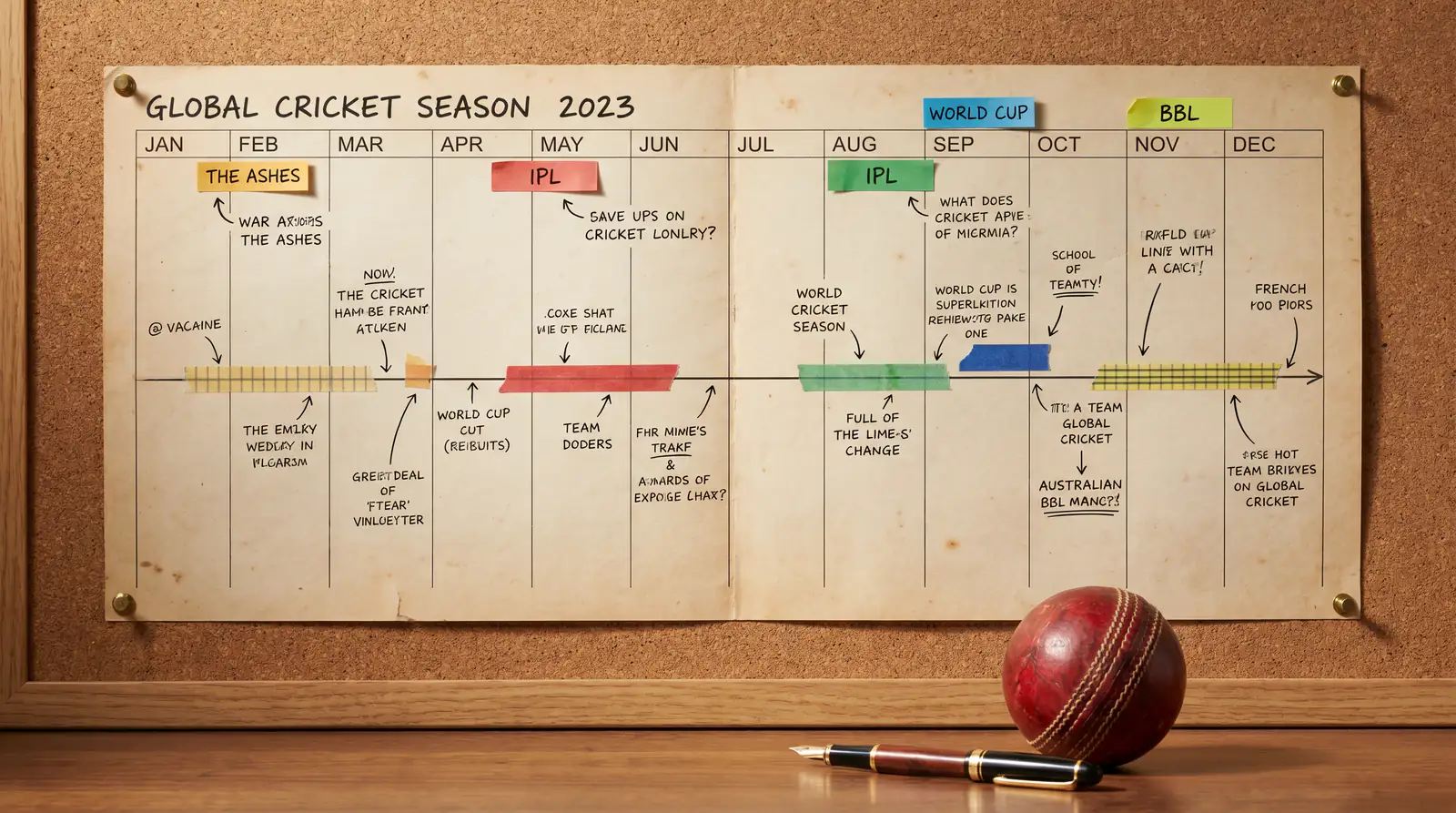
The cricket calendar runs year-round, but the betting calendar concentrates in five windows. Each window has its own dominant tournament, its own market depth, and its own seasonal pattern of UK punter behaviour.
March to May belongs to the Indian Premier League. UK sportsbooks treat the IPL as the highest-priority cricket product of the year, with deepest books, tightest margins, and the largest single-fixture turnover on the calendar. Match winner margins compress to 2 to 4 percent on top fixtures. Player markets carry depth that the rest of the calendar rarely matches. The IPL is the cricket equivalent of the Champions League final stretch in football betting, except it runs for two months.
May to September is the Northern Hemisphere window — England Tests, Ashes years aside, plus ODI and T20I bilateral series, plus The Hundred and County Championship. UK domestic interest is highest in this window, but international turnover concentrates on whichever tour England is hosting at any given moment.
August to September overlaps with The Hundred, which has carved out its own UK summer audience and changed the shape of the British betting calendar in ways that the County Championship never did. The Hundred final pulled more than 1.3 million live BBC App viewers in 2025 and the competition itself sold 580,000 tickets, with cumulative attendance since 2021 above 2.5 million.
October to December is the southern hemisphere window: the Big Bash League in Australia, the Pakistan Super League fixtures that slot into early year, the Bangladesh Premier League, and the various Caribbean and South African T20 leagues. Margins widen here for UK books because the audience is smaller, but the volume is constant.
December to February carries ICC events and bilateral Test tours, depending on the year. Ashes years compress UK turnover into the southern hemisphere tour, with November to January carrying the heaviest UK Test-cricket book of any season. Non-Ashes years see UK money distributed more evenly across India and Sri Lanka tours and ICC qualifier events.
The calendar’s compression matters because operators allocate book depth to whichever competition is live in any given week. The same operator might offer thirty markets on an IPL fixture and only six on a contemporaneous Bangladesh Premier League fixture, even though both are T20s on the same evening. The depth is finite, and it is reserved for the audience that pays.
Franchise Leagues vs International Series in UK Pricing
Franchise cricket is the dominant cricket product worldwide. International cricket is the dominant cricket product in the UK. The two operate under different pricing logics, and confusing one for the other is the most common new-punter mistake I see.
Franchise cricket is built on club-style rosters: teams are owned by investors or syndicates, rosters are constructed through auctions or drafts, and the same player may appear for an IPL franchise in May, The Hundred franchise in August, and a Big Bash franchise in December. The model is closer to football’s club system than to international cricket’s national team structure. Pricing reflects this: franchise team form is a hybrid of roster strength and recent performance, and the operator’s model has to disentangle the two.
The economic scale matters. The England and Wales Cricket Board completed franchise deals worth more than £975 million across the eight Hundred teams in 2025, with more than £500 million committed to reinvestment in the English and Welsh cricket ecosystem. That investment level changes how operators price the competition because the financial commitment behind the franchises shapes the long-term competitive structure, which in turn affects how the model weights pre-tournament priors.
International cricket pricing is more stable because the team identity is fixed. England playing Australia today is fundamentally the same team identity as England playing Australia in 2005 — different players, same flag, same governing structure, same long-form data history. The operator’s model has decades of clean reference data to lean on. Franchise pricing, by contrast, has at most two decades of IPL data, less for newer leagues, and the data quality varies.
The implication for the punter is that international fixtures carry tighter pricing on match winner and series markets because the model is more confident. Franchise fixtures carry wider margins on the same markets because the model is less confident. The trade-off is that franchise cricket has more market depth on player props and exotic specials, because the audience demand is higher and the operator runs the wider menu to attract action.
For UK punters specifically, the IPL is the franchise league with the deepest coupon, the tightest margins, and the most stable pricing. The fundamentals of IPL betting deserve a dedicated treatment, which I cover in detail in my IPL betting guide. The point relevant here is structural: the IPL is the franchise league where the gap between franchise pricing and international pricing has narrowed most. Other franchise leagues — BBL, PSL, CPL — still carry the structural margin penalty that smaller audiences impose.
The Hundred and Its Effect on UK Summer Markets
The Hundred is not a betting product. It is a broadcast product that became a betting product as a side effect. Understanding the order matters because it explains why the pricing structure is unusual.
The format is hundred balls per side, divided into ten-ball overs except for two five-ball sets. The hundred-ball compression and the men’s-women’s double-header structure give the competition broadcast value that 50-over and 20-over formats do not. The 2025 final pulled more than 1.3 million live viewers on the BBC App alone, against ticketing of 580,000 across the competition and cumulative attendance since 2021 above 2.5 million.
For betting, the format compression affects pricing in two specific ways. First, the variance per match is lower than T20 because there are fewer balls in which an outlier batter can dominate. Operators reflect this with marginally tighter match-winner margins than equivalent T20 fixtures. Second, the over markets are restructured: instead of pricing 20 overs of six balls each, the operator prices sets of five balls each, with different field-restriction overlays. This is a meaningful pricing change, and it caught most operators off guard in the competition’s first season. They have adjusted.
The £975 million franchise valuation completed in 2025 changes the longer-term pricing because the financial scale of the competition is now embedded. Teams have stronger rosters than in earlier seasons, the player-pool depth is higher, and the operator’s pre-tournament priors weight the competition closer to T20 international standards than to second-tier domestic T20. The pricing engine treats The Hundred more like the IPL in 2025 than like the County T20 Blast.
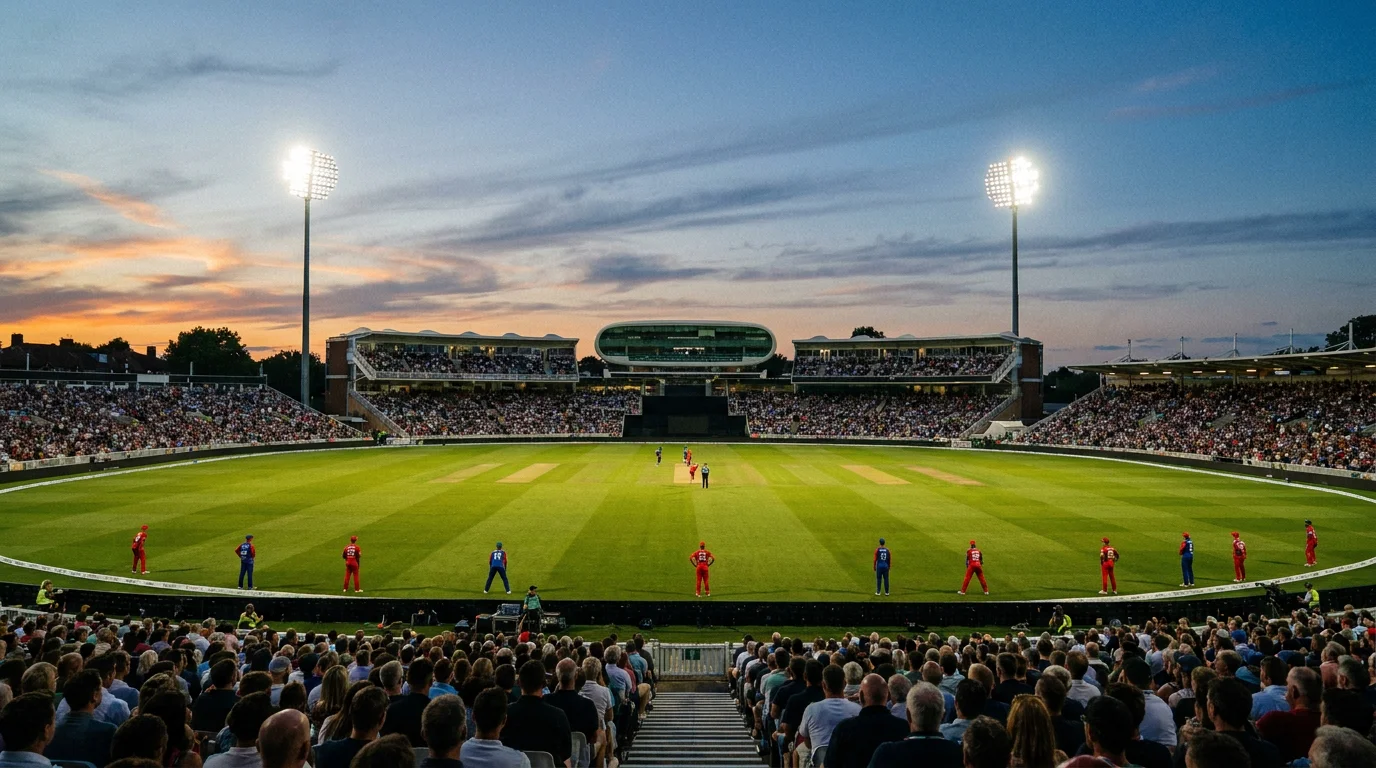
What this does to the UK punter’s behaviour is direct. The Hundred turnover sits behind the IPL and the Ashes in any non-Ashes year, but it has overtaken the County Championship and the T20 Blast for UK in-play volume on individual matches. The men’s-women’s double-header structure also delivers two markets per matchday slot, which doubles the in-play action available to UK punters during the competition’s window.
One specific pricing pattern to know about The Hundred: the strategy timeout, where the bowling team can take a strategic break, affects momentum in ways that are partially priced and partially not. After a strategic timeout, the rate of wickets in the next ten balls historically rises modestly, and the next-wicket market does not always reflect this fully. Sharp punters who track timeouts have found a small edge in the post-timeout next-wicket book, though the edge has compressed as operators adjusted in 2024 and 2025.
Ashes, ICC Events and Bilateral Tours
The Ashes is a five-Test bilateral series between England and Australia that arrives every two years and pulls UK attention out of proportion to its sporting significance. It also pulls more UK turnover than any other Test-cricket product on the calendar.
Ashes betting is dominated by series outright and match winner books, with the supplementary markets — top series run-scorer, top series wicket-taker, leading first-innings batter by match — carrying deeper books than the equivalent markets on any other Test series. The series outright is usually opened by UK operators twelve months in advance and remains active throughout the build-up. Prices drift considerably between opening and series start because lineups are unknown, injuries accumulate, and form curves shift.
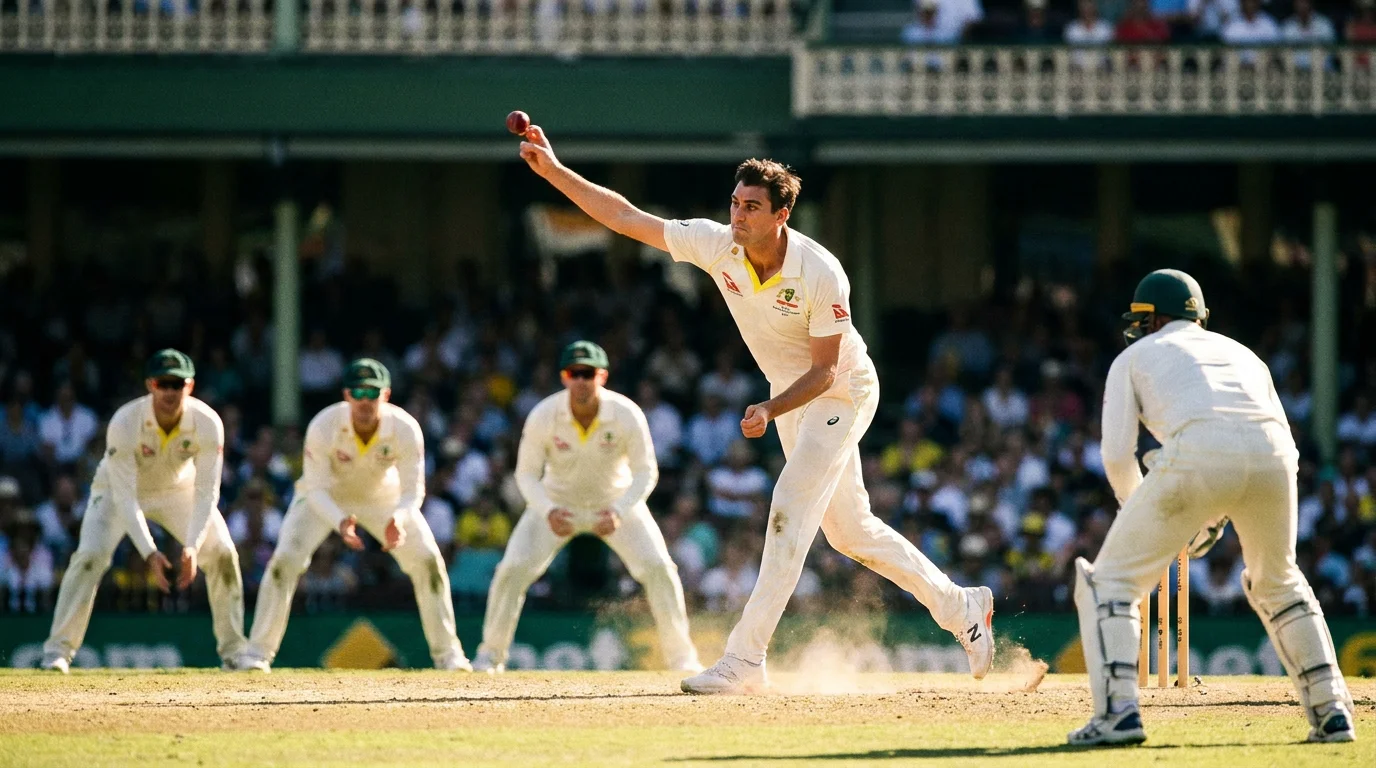
The 2025-26 Ashes carried its own pre-series controversies. As Sir Andrew Strauss observed on the build-up, England’s captain Ben Stokes has pushed English Test cricket forward quite a substantial way alongside head coach Brendon McCullum, but he has got vulnerabilities — Stokes — and is known as an emotional guy. The framing is editorial, not predictive, but the point is operationally relevant: pricing engines have started to incorporate captaincy and leadership patterns as features, and the public discussion of these vulnerabilities feeds the model’s contextual layer.
ICC events — the ODI World Cup, the T20 World Cup, the Champions Trophy — have their own pricing logic. Tournament outrights open long before the competition starts, with favourites typically at single-digit fractional prices. The pre-tournament prices reflect bookmaker hedging across a long booking window, which means they are usually wider than the model’s true probability would suggest. Once the group stage starts, prices sharpen rapidly as the operator’s book balances.
Bilateral tours — three-Test series outside the Ashes, ODI and T20I series between top-eight nations — carry tighter pricing on the individual matches than ICC events because the operator has more reference data per fixture and the audience is more predictable. Series outright prices on bilateral tours are tighter than ICC outrights for the same reason.
One settlement pattern worth knowing across all international competitions: tied series in bilateral Test cricket. A drawn series — two-all in a four-Test series, for example — settles the series outright in favour of whichever team already held the trophy heading into the series. The “drawn series” outcome is a third-way option in the outright book, and dead-heat rules do not apply. Punters who read the trophy-retention rule before staking on series outrights save themselves regular surprises.
County Championship and T20 Blast Pricing Realities
The County Championship is the world’s oldest domestic first-class competition and the worst-priced cricket market in the UK calendar. The two facts are connected.
UK operators carry the County Championship because they have to — domestic operators see English county cricket as a portfolio requirement — but the books they offer are shallow. Match winner is usually the only headline market. Team total over-lines appear on most fixtures. Player markets are rare. In-play coverage is limited to the match winner and occasional partnership markets, with thin liquidity throughout.
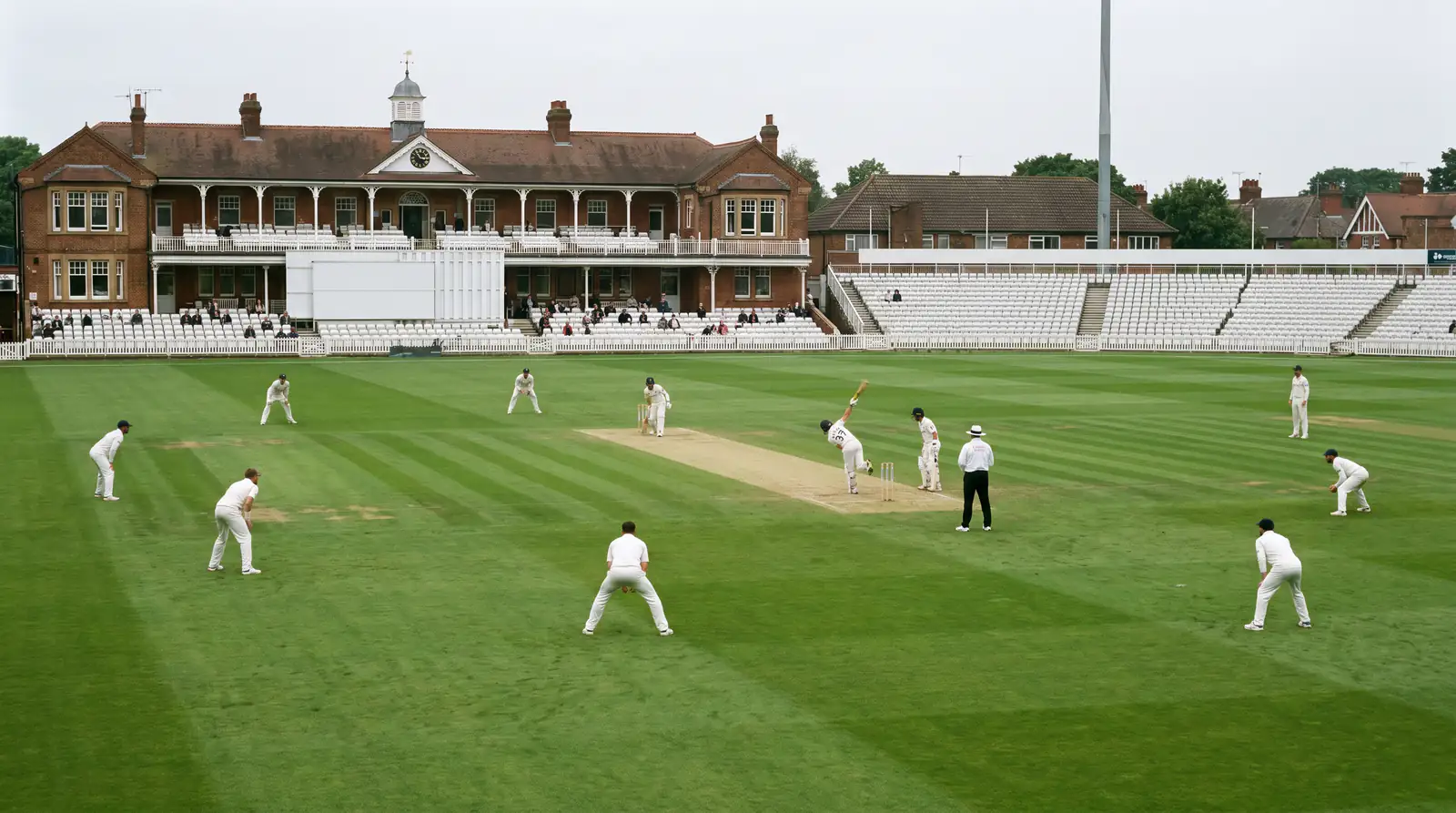
The financial scale of the competition explains the depth. Surrey County Cricket Club reported the largest county revenue at £65 million in 2023, while Leicestershire reported the smallest at £5.5 million. The disparity tells you everything about how the competition is structured: top-tier counties operate at small-Premier-League-club scale, while bottom-tier counties operate at non-League football scale. UK operators reflect this with wider margins on Leicestershire fixtures than Surrey fixtures.
The T20 Blast occupies a different position. It is shorter, more televised, and pulls more UK in-play attention than the Championship. Operators offer deeper books on Blast fixtures than on Championship fixtures, with player props and over markets reliably available across all eighteen counties. Margins compress on televised Blast fixtures to roughly T20 international levels — 4 to 6 percent — and widen on non-televised midweek fixtures to 8 to 10 percent.
The pricing peculiarity of both competitions is squad-rotation risk. County clubs rotate squads aggressively, especially in non-final weeks, and the operator’s pre-match price may be based on a team-sheet that has not yet been confirmed. The team-sheet for a County match is sometimes announced as late as the morning of the toss, and the operator’s price can move sharply when the team-sheet appears. Punters who stake before the team-sheet is confirmed are taking lineup risk on top of match risk.
One specific pricing pattern in the County Championship: declaration cricket. Captains in the Championship use declarations strategically to set up a result on day four, and the timing of a declaration shifts the match-winner book substantially. A captain who declares twenty minutes earlier than the model expected has effectively converted a draw probability into a result probability, and the price action can be sharp in the half-hour around the declaration. This is a niche market read but a real one.
Women’s Tournaments and Their Growing Market Depth
UK operators ran limited women’s cricket books five years ago. Today most run full books on women’s IPL, the women’s Hundred, ICC women’s events, and England women’s bilateral tours. The depth has tracked the broadcast audience and the financial investment behind the competitions.
The financial scale is the lead indicator. The England and Wales Cricket Board plans to invest approximately £400 million in women’s cricket over the next decade to achieve commercial sustainability. That investment level is the trigger for the operator-side decisions about which women’s markets to publish, how deeply to run player props, and how aggressively to price-match across operators.
Salary progression has been the visible signal. The average salary in the women’s Hundred has risen from £8,000 in 2021 to £29,100 in 2025, with the top contract next season expected to reach approximately £130,000 against £15,000 in the competition’s first year. The salary growth attracts higher-quality international rosters, which raises the standard of competition, which tightens operator pricing on the markets they offer.
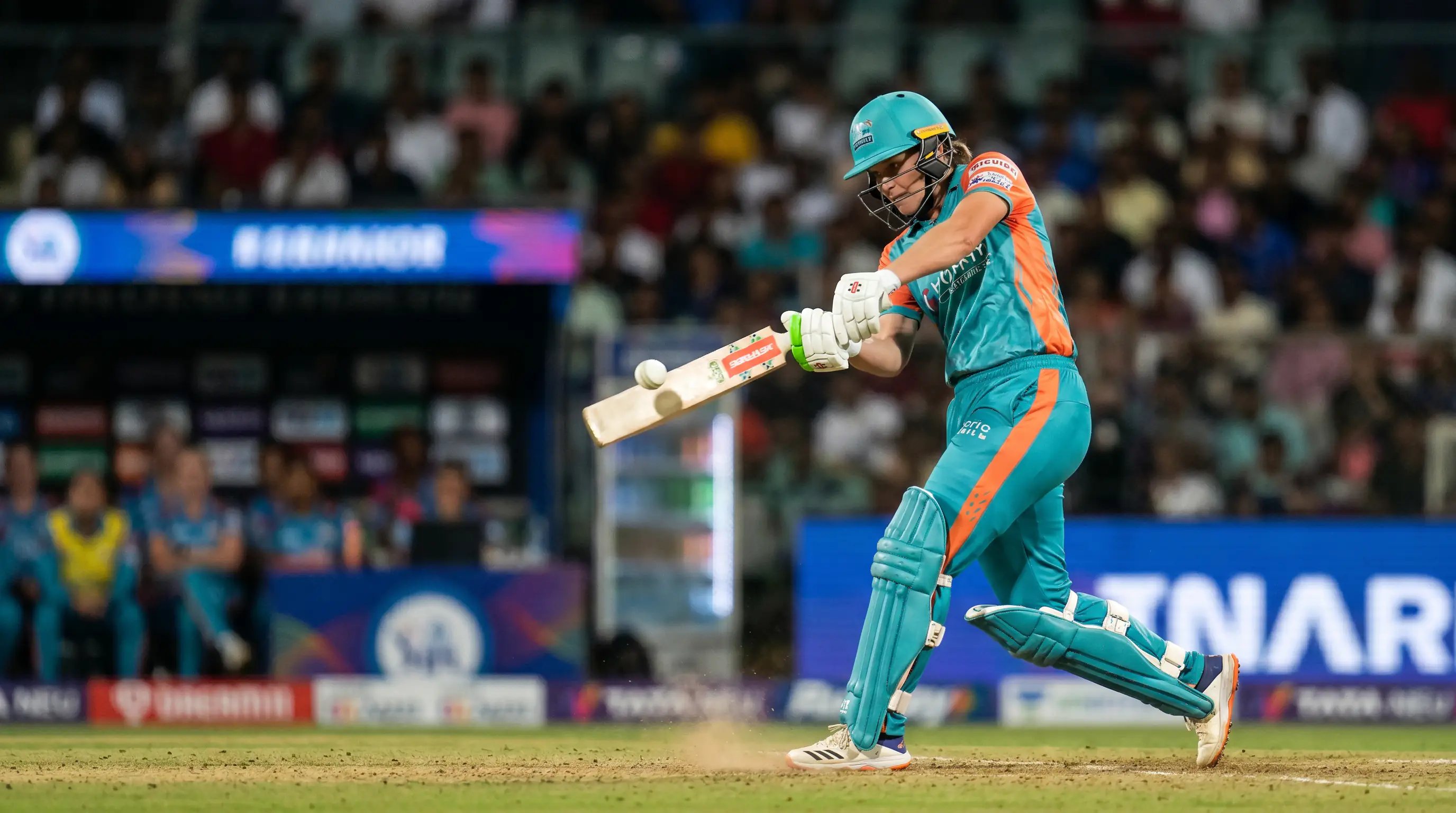
For the punter, women’s cricket markets now carry pricing in the same broad range as men’s equivalent fixtures of similar tournament size. Women’s IPL fixtures are priced like third-tier men’s franchise fixtures — competitive but with wider margins than the men’s IPL. Women’s Hundred fixtures carry margins comparable to the men’s Hundred, partly because of the double-header structure that puts both genders on the same coupon.
The market depth still varies more than men’s cricket in one respect: player props. Operators run a smaller menu of player props on women’s fixtures because the data history is shorter and the per-player sample sizes are smaller. Top-batter and top-bowler markets are routinely available; method-of-dismissal and specific over markets are less so. This is converging year by year as the data history accumulates, but it is not yet at men’s parity.
One specific pricing pattern in women’s tournaments worth knowing: the impact of national-team rest cycles on franchise rosters. International women’s players move between national team duty and franchise commitments more frequently than men’s players, and the resulting roster instability is something the operator’s model is still catching up with. Pre-tournament outright prices on women’s franchise competitions are sometimes built on assumed rosters that change before the tournament starts, and sharp punters who track international scheduling can find pre-tournament outright value.
Where Liquidity Pools and Where It Thins
Cricket betting liquidity is not evenly distributed. It pools around the biggest broadcast products and thins to almost nothing on the smallest. Mapping the pools is the first task of any serious cricket punter.
The 18 first-class county clubs in England and Wales together generated £306.1 million in revenue in 2023. That figure, divided across the depth of the competition’s calendar — Championship, Blast, One-Day Cup, women’s competitions — produces the structural liquidity ceiling for English domestic cricket markets. By comparison, the IPL’s broadcast revenue alone in any recent year would exceed the entire collective revenue of English county cricket. Liquidity follows revenue.
The pools are: IPL, Ashes, ICC events, The Hundred, England home internationals, Big Bash, Pakistan Super League. The thin zones are: County Championship four-day, lower-division domestic T20, women’s domestic competitions outside the Hundred, secondary franchise leagues (Major League Cricket, Lanka Premier League, Bangladesh Premier League outside top fixtures).

For the punter, the practical implication is that meaningful stakes — £100 or above — should sit on liquidity pools, not thin zones. The pricing on liquidity pools is tighter, the integrity monitoring is more robust, and the speed of price discovery is faster. Stakes of any size on thin zones face wider margins, more variance per ticket, and higher integrity-risk exposure on lower-tier competitions where suspicious activity has historically concentrated.
Operators allocate their pricing capacity to the pools because their commercial returns concentrate there. The flip side is that finding pricing errors in liquidity pools is hard, because the model has the most reference data and the most aggressive integrity layer. Mispricings still occur, but they close fast. Errors in thin zones persist longer because the operator allocates less attention to them, but the thin-zone markets are also where integrity risk concentrates, and those two facts cancel each other.
The honest advice for a UK punter building a cricket portfolio is to focus stakes on the pools and use the thin zones for observation only. The competitions where edge is most defensible — IPL, top-tier ICC events, Ashes — are also the ones where the integrity layer is most robust, and the alignment is no accident.
Seasonal Behaviour of UK Punters Across Tournaments
UK punters do not bet evenly across the year. They concentrate in specific windows, and operators allocate marketing and product capacity to match.
The age group most active in non-lottery gambling participation in the UK is 25 to 34, which reached 35 percent participation by the end of 2025. That cohort drives the bulk of UK cricket betting turnover, and its behaviour shows clear seasonal patterns: heavy IPL activity in March to May, sustained engagement through the English summer, a pullback in early autumn, and renewed activity around southern hemisphere T20 leagues from October.
The Ashes is the singular exception to the seasonal pattern. Ashes years see UK turnover compress into the November-to-January window in a way no other competition produces. The Christmas Test and the New Year Test in Australia have historically been the highest-turnover individual UK Test fixtures of any year they occur, despite the time-zone challenge.
The mobile concentration matters too. Roughly 76 percent of 18-to-24-year-old UK gamblers use mobile as their primary channel, and that proportion is rising across older age groups. Operators have built their in-play cricket products around mobile-first interfaces, with desktop carrying a residual share that continues to decline. The implication for punters is that the latest in-play features — fast cash-out, bet builders, live streaming — appear on mobile before desktop, and the gap is widening.
The seasonal patterns also shape the operator’s offer cadence. Welcome bonuses, BOG promotions on cricket, acca insurance offers — all of these are heavily concentrated in the IPL and Ashes windows. Punters who time their account openings to these windows often get the most generous initial offers, though the offers are typically restricted to a specific number of qualifying bets and capped at meaningful but not generous levels.
Tournament-Specific Reader Questions
The four questions below are the ones that arrive most often when readers move from general cricket betting to tournament-specific staking. They are about coverage, structure, and settlement.
Which UK sportsbooks cover the entire global cricket calendar?
The major UK-licensed operators — the largest national books — carry all International Cricket Council events, the Indian Premier League, the Ashes, The Hundred, both men’s and women’s, the County Championship and T20 Blast, the Big Bash League, the Pakistan Super League, and the Caribbean Premier League. Smaller operators and exchanges may skip secondary leagues such as the Bangladesh Premier League or Lanka Premier League. Coverage of women’s domestic competitions outside the Hundred remains uneven. Check the operator’s competition list before opening an account if you stake regularly on niche tournaments.
Do private investments in The Hundred change market liquidity?
Yes, materially. The 2025 franchise transactions valued the eight Hundred teams at over £975 million collectively, and the financial scale changes how operators price the competition because the structural commitment behind the franchises is now meaningful. Match-winner margins on The Hundred have compressed since the franchise deals were completed, player-prop menus have expanded, and the operator-side allocation of liquidity to the competition has increased. The competition is now priced more like a top-tier franchise league than like a startup domestic format.
How do bilateral tours differ from ICC events in pricing?
Bilateral tours carry tighter pricing per individual match because the operator has more reference data per matchup and the audience patterns are predictable. ICC events open with wider margins on the outright market because the tournament booking window is long and the operator is hedging across many months of pre-tournament action. Once an ICC event starts, the outright prices sharpen rapidly. Individual match prices in ICC events are usually tighter than bilateral tours, because the heightened audience tightens the operator’s margin discipline.
How early can a tournament outright be settled before the final match?
Tournament outright settlement rules vary by operator and by tournament structure. The standard rule is that outright markets settle when the result is mathematically certain — for example, when a team has secured the title with one round of fixtures remaining. Some operators settle earlier on official confirmation by the governing body; others wait for the trophy presentation. The earliest possible settlement is the moment of mathematical certainty, and the latest is the official competition closure. Read the operator’s tournament-specific rules in their cricket help section before staking on an outright with the intention of cashing out late.
