
 Available in US
Content
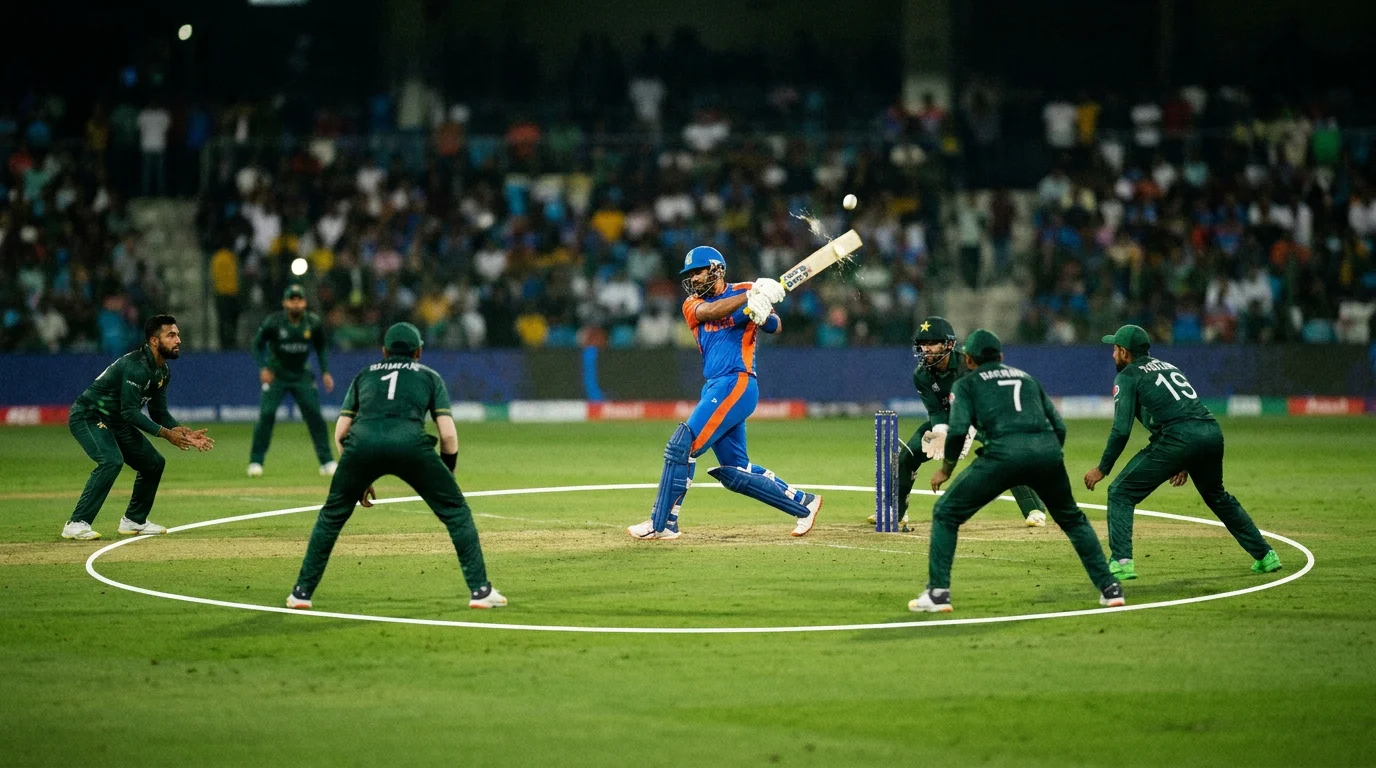
Why the First Six Overs Have Their Own Market
I once watched a punter friend pick a 65.5 powerplay total at evens, fall asleep two overs in, and wake up to a 28-3 mess on the screen. He’d spent his analysis time on the match winner and treated the powerplay as an afterthought. The market punished him efficiently, as it usually does.
The powerplay runs market exists because the first six overs of a limited-overs innings are functionally a different game from the rest. The field is restricted, fewer fielders sit on the boundary, and the openers either explode or implode — there’s not much middle ground. UK sportsbooks isolate this stretch into a separate market because the variance is contained and the analytical inputs are different from a full-innings total.
Treating powerplay runs as a standalone product is the right mental model. The over-under line you see is built from a different equation than the full-innings line, and the value pockets are not where most pre-match punters look.
The Field Restrictions That Shape the Number
The field-restriction rules are the entire reason this market behaves the way it does. Most punters know them in outline; far fewer think about them numerically.
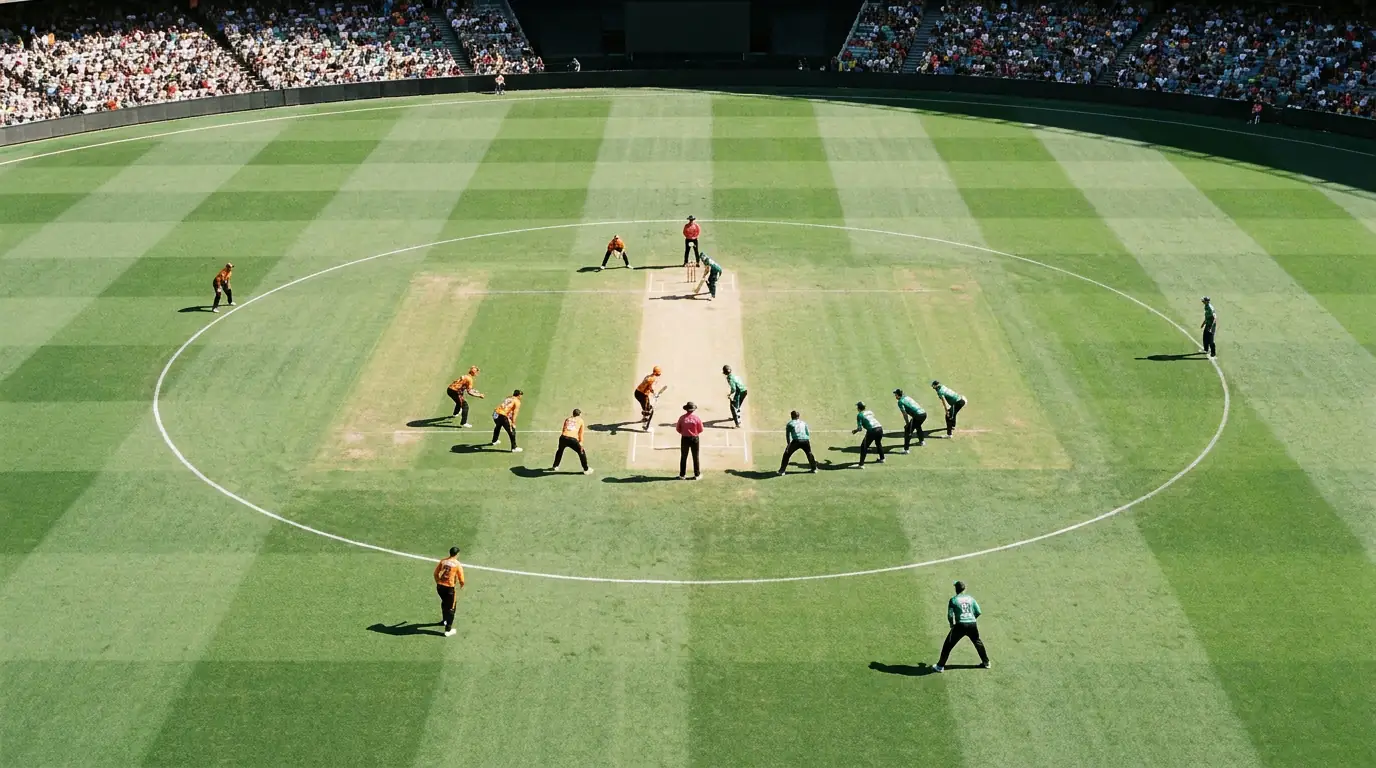
In a standard T20, only two fielders are permitted outside the 30-yard circle during the six-over powerplay. In an ODI, the first ten overs operate under the same restriction — two fielders outside, the rest inside. The mathematical consequence is that boundary protection is thin, the gaps in the inner ring are wider than they look on television, and a clean strike off a half-volley turns into a four with very high probability.
The effect compounds. A side with two genuinely aggressive openers in T20 will average around 50 to 55 runs in the powerplay on a true surface; a conservative pair playing themselves in can finish on 35 or lower. That spread of 20 runs over six overs is what the over-under market is trying to price.
The line itself sits somewhere in the middle of that range. UK sportsbooks tend to set it half a run above the venue’s median powerplay score for the format, then nudge it for the strength of the bowling attack. That nudge is small, often only one or two runs. The reason is that pricing engines treat powerplay batting variance as larger than the bowling-attack effect, and the data backs that view in T20 cricket.
T20 and ODI Powerplay Pricing Differ Sharply
The first ODI powerplay I tried to model against the same logic as a T20 powerplay was a humbling experience. The numbers didn’t behave at all the same way, and the reason is that the two markets price two completely different states of mind.

In T20, the powerplay is the single highest-scoring phase of the innings. Openers are picked specifically to attack this window. The strike rate inside the powerplay across the franchise leagues sits around 8.5 to 9.5 runs per over on a good surface. The IPL 2025 broadcast data, which reached more than 1 billion viewers and generated over 840 billion minutes of watch time — with digital viewing up 29 per cent year on year — gives us the deepest sample in T20 history for this phase. That sample sits comfortably north of 50 runs per powerplay on average across the league.
The ODI powerplay is a longer, more measured phase. With ten overs to work through rather than six, openers can afford to play themselves in for the first two or three before opening up. The average ODI powerplay score sits in the 50-60 range — strikingly similar to T20 in absolute terms, but spread across ten overs rather than six. Run rate is significantly lower; variance is significantly lower; the over-under line is therefore softer to break.
What this means in practice: I treat the T20 powerplay over-under as a tactical bet that lives or dies on the openers’ approach, and the ODI powerplay over-under as a pitch-and-conditions bet where bowler quality matters more than batter intent.
Weather and Pitch Overlay on the Powerplay Line
The cleanest weather signal I’ve isolated on this market comes from English Test grounds in the early summer, even though Tests don’t have powerplays. The reason is the analogue: a fresh, overcast morning in Leeds is the closest first-class equivalent to a fresh, overcast morning in a Birmingham T20.
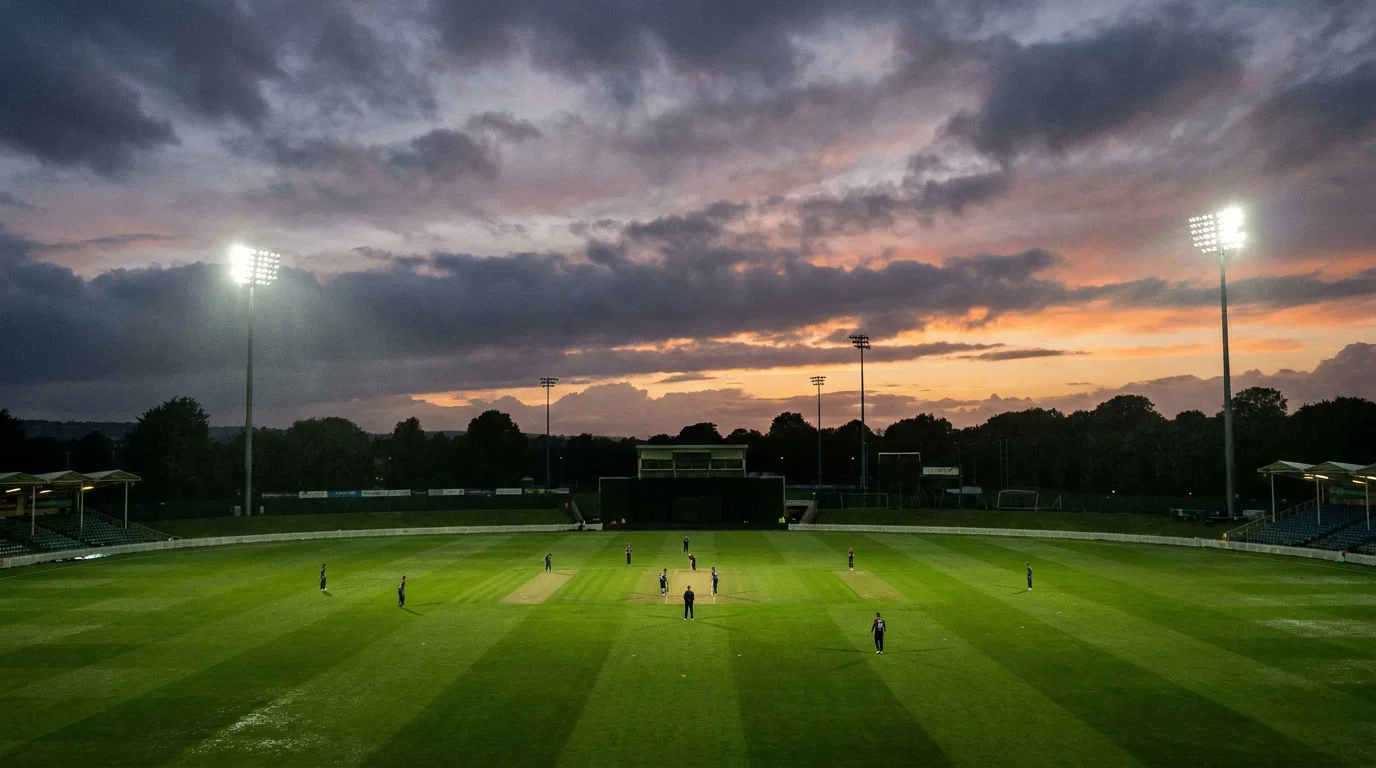
The 2025 England versus India Test series produced an extraordinarily clean data point. Batting averages on the sunny final day at Headingley reached 40 runs per wicket, against 26 on the overcast first day — a 53 per cent uplift purely from cloud cover changing. That’s a long-form sample but the read across is direct: cloud cover in the first six overs of a limited-overs innings has a comparable depressing effect on scoring.
My working rule on this is that an overcast forecast for the powerplay window shifts my expected total downward by around 8 to 12 per cent for T20 and slightly less for ODI. That’s enough to flip a line I’d otherwise lean over into a line I’d want under.
Pitch type is the second overlay. A slow, dry surface in subcontinent T20 cricket suppresses powerplay scoring even more than cloud cover does, because the ball doesn’t come on for the cut and pull shots that openers rely on. The line moves down two or three runs, which still doesn’t always cover the actual scoring drop.
Reads That Move the Powerplay Live
The in-play powerplay market is where I do most of my work in this category, because the pre-match line has been priced to reasonable equilibrium and the value windows open quickly during the over-by-over flow.
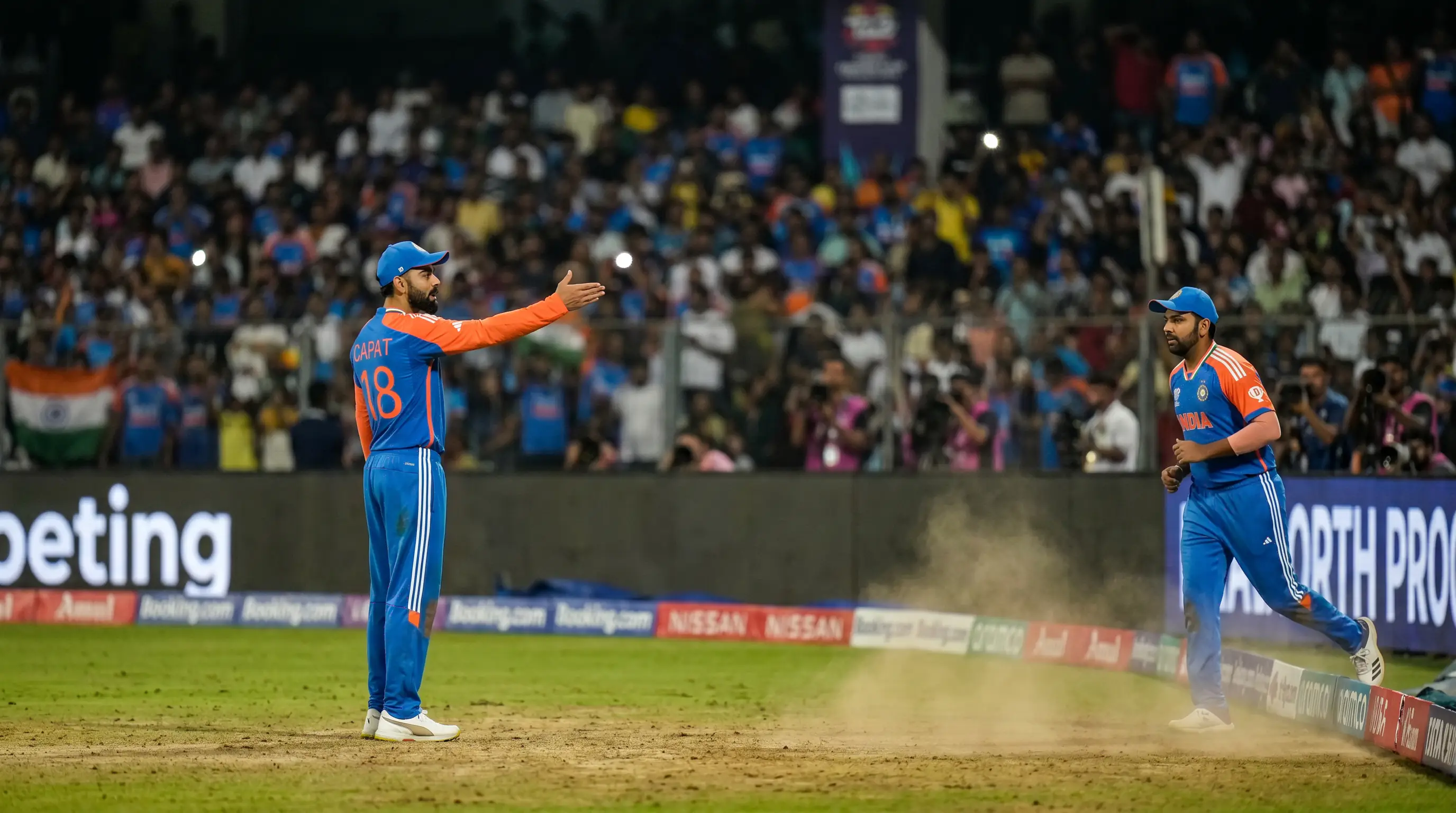
Three live signals shift the number meaningfully. First, an early wicket — the maiden delivery dot becomes a wicket on ball three, and the line drops by four or five runs as the model accounts for a new batter playing themselves in. Second, a captain switching to spin inside the powerplay, which usually shrinks both expected runs and expected wickets and is a signal worth catching. Third, a captain who looks rattled by the opening pair and pulls his strike bowler off after two overs.
That third signal is harder to read for new punters because it requires watching the captain rather than the ball. The behavioural read matters here. Sir Andrew Strauss made this point bluntly about Test captaincy on the Sky Sports Cricket Podcast ahead of the 2025/26 series: “He’s pushed English Test cricket forward quite a substantial way, alongside [head coach Brendon] McCullum. But he has got vulnerabilities, Stokes. We know he’s an emotional guy.” The captain’s emotional state is a live input the pricing model can’t quantify, and reading it correctly is the difference between catching a value swing in the powerplay and missing it.
Powerplay Market Questions
Settlement edge cases on the powerplay market are surprisingly common, mostly because rain or short overs interact with the six-over window in ways punters don’t anticipate.

Is the powerplay line settled at five overs if rain reduces the innings?
The powerplay total typically settles only after the full powerplay has been bowled, regardless of how the rest of the innings unfolds. If rain reduces the innings before the powerplay is completed, most UK sportsbooks void the market and return stakes. A handful settle at the over the umpires officially call as the end of the shortened powerplay if it was reached, but the safest assumption is void unless the full six overs were bowled. Check the specific operator rules for rain-shortened powerplay settlement before staking.
What is a ‘mandatory’ vs ‘batting’ powerplay in modern rules?
In current playing conditions, the mandatory powerplay refers to the opening field restriction overs at the start of an innings — six overs in T20, ten overs in an ODI — where only two fielders are allowed outside the inner circle. The ‘batting powerplay’ was a feature of older ODI rules that allowed the batting side to choose a separate three-over restriction window later in the innings, but it has been removed from the current ICC playing conditions. Modern ODIs use only the mandatory opening powerplay and the middle-overs rule allowing four fielders outside the circle from overs 11 to 40.
