
 Available in US
Content
- What Changes the Moment the First Ball Is Bowled
- How UK Sportsbooks Run a Cricket Live Market
- The Stream Delay Problem and Why It Matters for Pricing
- Reading Match Momentum Beyond Run-Rate
- Next Wicket, Next Over Runs and Method of Next Dismissal
- Tactical Reads That Differ Between Test, ODI and T20
- Partnership Arcs and How They Shape Live Prices
- Live Markets Around Rain Delays and Inspections
- Staking Discipline in a Live Cricket Environment
- Live Cricket Betting Reader Questions

What Changes the Moment the First Ball Is Bowled
Pre-match cricket pricing is a model versus another model. Live cricket pricing is a model versus a stadium full of events that arrive faster than the model can process them. The two activities use the same screens, the same operators, and almost none of the same skills.
Across the UK, somewhere around 290 million online sports bets are placed every month. A meaningful chunk of those are in-play, and cricket — with its slow build, sudden punctuation, and televised audiences — generates a disproportionate share of the in-play action. The market depth on live cricket is thinner than on pre-match, but the rate of pricing decisions per minute is higher. That asymmetry is the entire game.
I have learned to treat in-play as a different sport from pre-match betting, even when the underlying match is identical. Pre-match analysis rewards patient modelling: historical data, lineups, conditions. In-play analysis rewards pattern recognition and speed: reading the field, identifying matchups, anticipating the captain’s next move before the operator’s pricing engine reprices the next-over runs market. The skills overlap less than newcomers expect.
The other thing in-play does is expose the limits of automated pricing. Pre-match prices are crafted overnight by traders with hours to think. Live prices are produced second by second by a pricing engine that has to balance accuracy, latency, and operator liability without human intervention except for the largest moves. That is where opportunity lives, and that is where the dangers live too. The rest of this piece is about both.
How UK Sportsbooks Run a Cricket Live Market
A UK sportsbook running a live cricket market is operating four systems in parallel. The data feed brings ball-by-ball events into the pricing engine. The pricing engine recalculates probabilities for every active market on every ball. The risk engine watches the operator’s exposure across the book. The compliance layer flags unusual betting patterns to the operator’s integrity desk and, where required, to the regulator.
The pricing engine is the heart. Sportradar’s Universal Fraud Detection System — the same machine-learning architecture that flagged 56 percent more suspicious matches in 2025 than in 2024 — sits inside the broader pricing and integrity stack used by many operators, with the count of detected events rising from 436 to 682 across that one year. The numbers are not directly comparable across operators, but they illustrate the trajectory: live cricket pricing is now an industrial-scale machine-learning operation, not a trader with a calculator.

The market expansion behind those numbers is real. As Khalid Ali of the International Betting Integrity Association observed when discussing rising alert volumes, alert counts are shaped by several factors including the expansion of regulated betting markets and associated improvements in monitoring reach and effectiveness. Translated for the punter, that means there are more live cricket markets available than there were five years ago, and the monitoring layer is genuinely more capable. Both points matter when you stake.
The four pricing decisions any UK live cricket market makes on every ball are: update the match winner, update the team total over/under, update the next-event prices (next wicket, next over runs), and decide whether to suspend any of those markets briefly. Suspensions usually fire for two reasons — a major event (wicket, boundary, end of over) that needs a moment to integrate, or unusual betting activity that triggers a review.
The market depth available to a UK punter live varies by fixture. A headline IPL match might carry forty active live markets; a County Championship four-day might carry six. The narrower the menu, the wider the margins on whatever is offered. Live betting in thin markets is a trap I see punters fall into repeatedly, and I have stopped recommending it except to readers who understand exactly what they are buying.
The Stream Delay Problem and Why It Matters for Pricing
You are watching a T20 on a streaming service. The bowler runs in. The ball is hit straight to the long-on fielder. You watch the catch take. You click “next wicket” — and the market is already suspended.
This is the stream delay problem in its sharpest form. Television and streaming feeds are delayed relative to the official data feed that operators use to price live markets. The delay varies by operator and by service, but it ranges from 5 to 30 seconds. Premium broadcast streams sit at the lower end. Free streams and certain mobile apps sit at the higher end. Your operator’s pricing engine sees the wicket before you do.

The implication for betting is that you cannot trade against your stream. By the time you have seen an event and decided to act, the market has already moved or suspended. The only way to use a stream in conjunction with in-play betting is as a confirmation layer for what the price action is telling you, never as a leading indicator.
Sharper operators run multiple data feeds — official scorers’ input, ground-level cameras, broadcast feeds — and reconcile them within milliseconds of each other. Smaller operators run a single feed and may be slower to price major events. The latency difference between operators is meaningful: if you are watching the broadcast and seeing a wicket fall, and one operator has already suspended the market while another has not, the lagging operator is the one with the stale price. Whether that stale price is exploitable depends on your reaction time relative to their suspension latency, and the honest answer is that almost no recreational punter is fast enough to act on it.
The other delay consideration is in-play coupon refresh on mobile. The operator’s app polls the pricing server at intervals — sometimes once per second, sometimes less often — and the price you see on screen is the last price your app pulled, not necessarily the latest published price. On a slow connection, the lag can extend to several seconds, during which the live market may have moved twice. Always confirm the price at slip placement, not at coupon view.
Reading Match Momentum Beyond Run-Rate
Run-rate is the variable every commentator quotes and most punters watch. It is also the variable the pricing engine has fully modelled, which means run-rate alone gives you nothing. Live cricket edge — when it exists — sits in the variables run-rate ignores.
The first variable is required-rate trajectory. In a chase, the required rate at any moment is a function of remaining runs and remaining balls. The model knows the current required rate. What it knows less well is the rate at which the required rate will rise given the current bowling rotation and field placements. If the chasing team’s required rate is climbing because the captain has the best bowlers operating from one end and the chase has stalled, the price on the chasing team to win can be longer than the situation justifies — the model has the current state but underweights the rate-of-change.
The second variable is matchup leverage. A right-arm seamer bowling into the wind on a slow pitch to a left-handed batter who scores 60 percent of his runs against pace bowling square of the wicket has a specific edge against that batter. The pricing engine knows the broad matchup probabilities; it does not always know the field positions in real time. A captain who has just moved a deep midwicket to short leg has shifted the matchup, and that shift is invisible to a model that only sees ball-by-ball events.
The third variable is captaincy patterns. Each Test captain has a default tactic when his team is under pressure. Some attack with the new bowler. Some default to spin. Some pull the field in. If you have watched a captain across thirty Test matches, you know what he does in specific situations, and that knowledge is faster than any data feed. Pricing engines have started to incorporate captaincy as a feature, but the public-data version is much cruder than the version a sharp human reader can carry in their head.
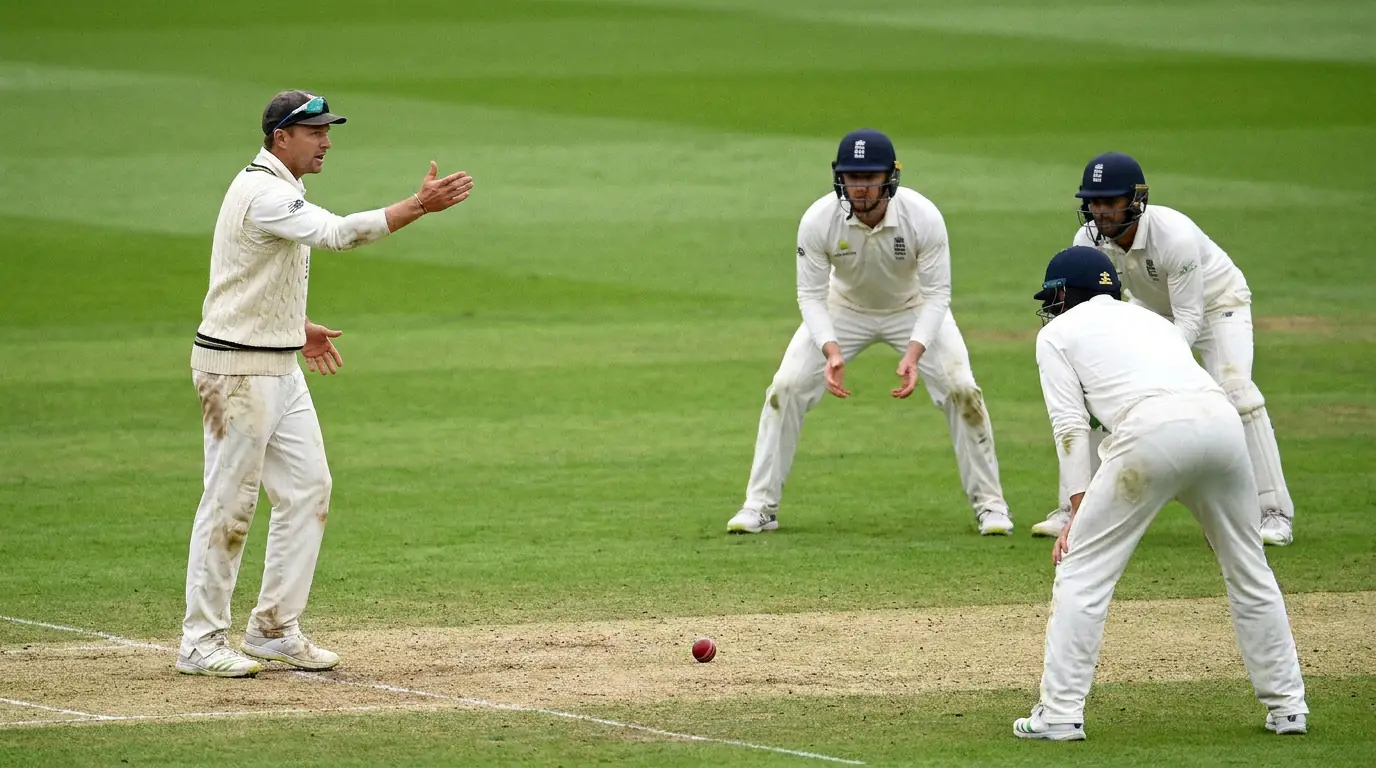
The fourth variable is dressing-room signals. Body language, drinks-break conversations, a captain visibly arguing with his bowler — these inputs do not appear in any data feed and they do shift outcomes. They are also the most overrated category of inputs in popular live-betting commentary, and I caution against weighting them heavily. They are confirmation, not evidence.
The compound of these four variables is what punters mean when they talk about “momentum”. It is real, it is partially priceable, and it is the only consistent source of edge in liquid live cricket markets. Pre-match knowledge does not survive into in-play. Pattern recognition does.
Next Wicket, Next Over Runs and Method of Next Dismissal
Next-event markets are the closest thing live cricket has to a casino table. They are fast, they are fun, they are priced with thicker margins than the underlying match-winner book, and they reward discipline absolutely.
Next-wicket markets ask which batter falls next, or in what manner, or both. The pricing on these is driven by the probability of each batter being out within a given window of balls. A new batter on a fresh score carries a higher dismissal probability in the first five balls than a set batter on fifty. The model knows this. What the model knows less precisely is the field setting and bowler matchup against this specific batter. That is where edge sits — when it exists at all.
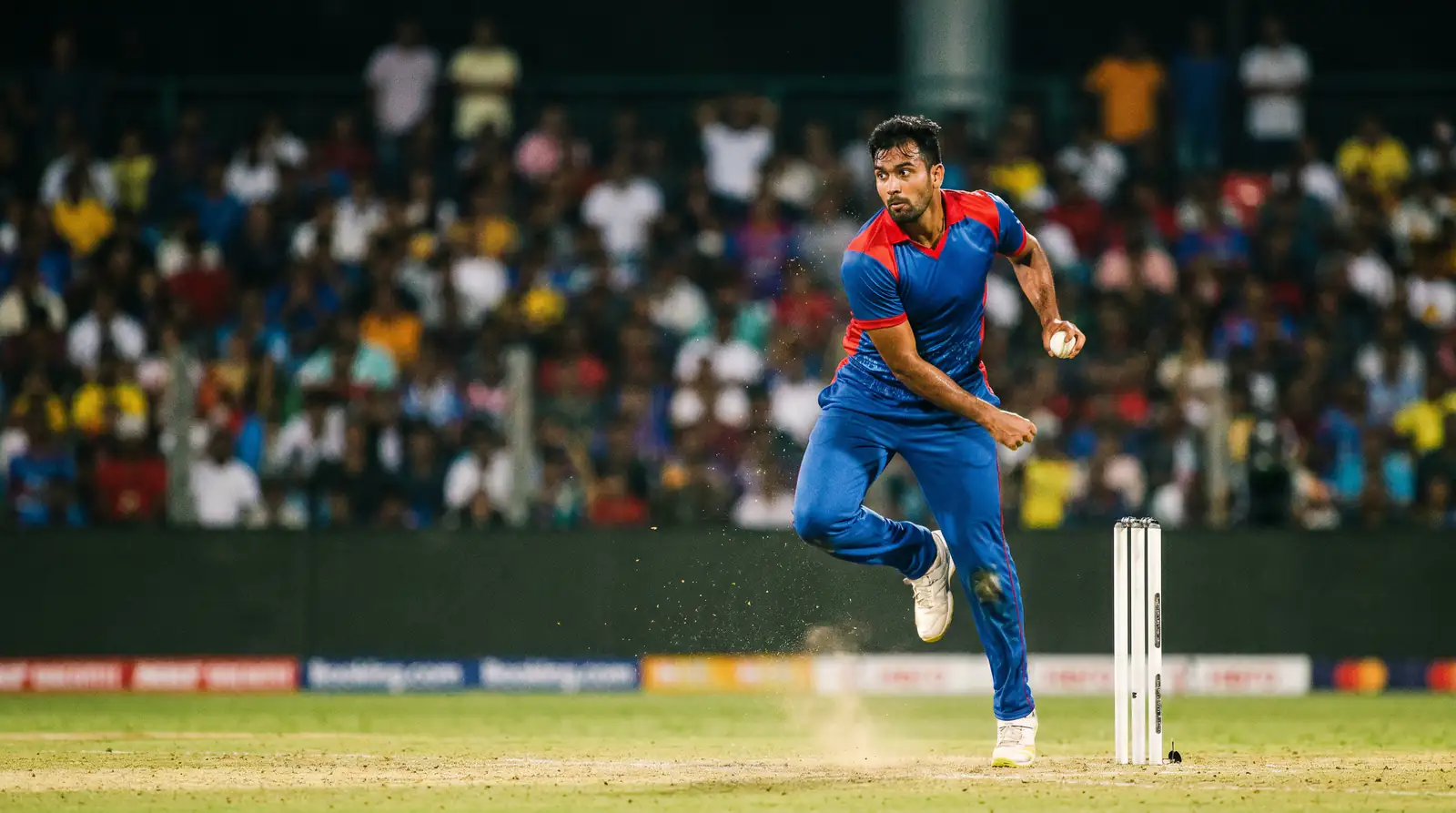
Next-over runs markets price the runs scored in the upcoming over against a published line. Powerplay overs carry higher lines than middle overs. The final over of an innings carries the widest distribution and the widest margin. The classic mistake is treating these as independent events: the runs in over fifteen are correlated with the runs in over fourteen because the same batter is on strike, the same bowler may be bowling, and the same field is in place. Pricing engines model the correlation; punters often do not.
Method-of-next-dismissal — bowled, caught, LBW, run-out, stumped — settles on whichever event occurs. The base rates are roughly stable: caught is the most common at around 55 to 60 percent of dismissals across formats, with bowled, LBW, run-out, and stumped sharing the rest. The pricing reflects those base rates with a margin layered on. Adjustments for the specific bowler and conditions are smaller than novices assume — a spinner brings the LBW and stumping rates up modestly, not dramatically.
The one consistent edge in next-event markets is in identifying when the operator’s model is using a generic distribution rather than a match-specific one. On smaller fixtures with thin data — minor T20 leagues, lower-tier T10 — operators often default to a generic prior, and that prior can be materially wrong for the specific match. The trade-off is that those same fixtures sit in the integrity-risk zone, and the wider lessons of cricket integrity counsel against staking heavily on markets where unusual flow is a real possibility.
Tactical Reads That Differ Between Test, ODI and T20
The Hundred final on the BBC App in 2025 reached more than 1.3 million live viewers. The same final’s in-play action — every legal ball, every wicket, every bowling change — was traded across UK sportsbooks at intensities that match-format Tests do not approach. Format dictates everything in live cricket.
In Test cricket, the tactical reads are slow. The new ball comes around every eighty overs, and the period between new balls produces predictable patterns: tight bowling from one end, attacking spinners from the other, a captain switching ends to refresh his attack. A live punter in Test cricket is largely watching for the moments when the pattern breaks — a captain bringing a part-time bowler on, an aggressive field placement against a tail-ender — and the markets that move are usually the team total over/under and the time-of-next-wicket markets.
ODI tactics compress the same reads into 50 overs. The middle-overs phase — overs 11 to 40 — is where most teams default to containment, and the pricing engine knows it. What the engine knows less well is when a captain switches tactic earlier than expected. A team that goes hard in overs 25 to 30 instead of waiting for the death overs creates a pricing window where the next-over runs market is set to the model’s middle-overs prior, not the team’s actual aggressive intent. That window can be exploited by punters who know the captain’s tendencies.
T20 tactics are different again. Twenty overs per side leaves no room for slow building, and every over is a tactical decision. The bowling changes are tighter, the field changes are constant, and the pricing engine has to reprice on every ball. Where the engine struggles is in the dead-rubber and franchise-fatigue moments — late in a tournament, when key players are rested and the lineups carry second-string composition that the model has not seen.
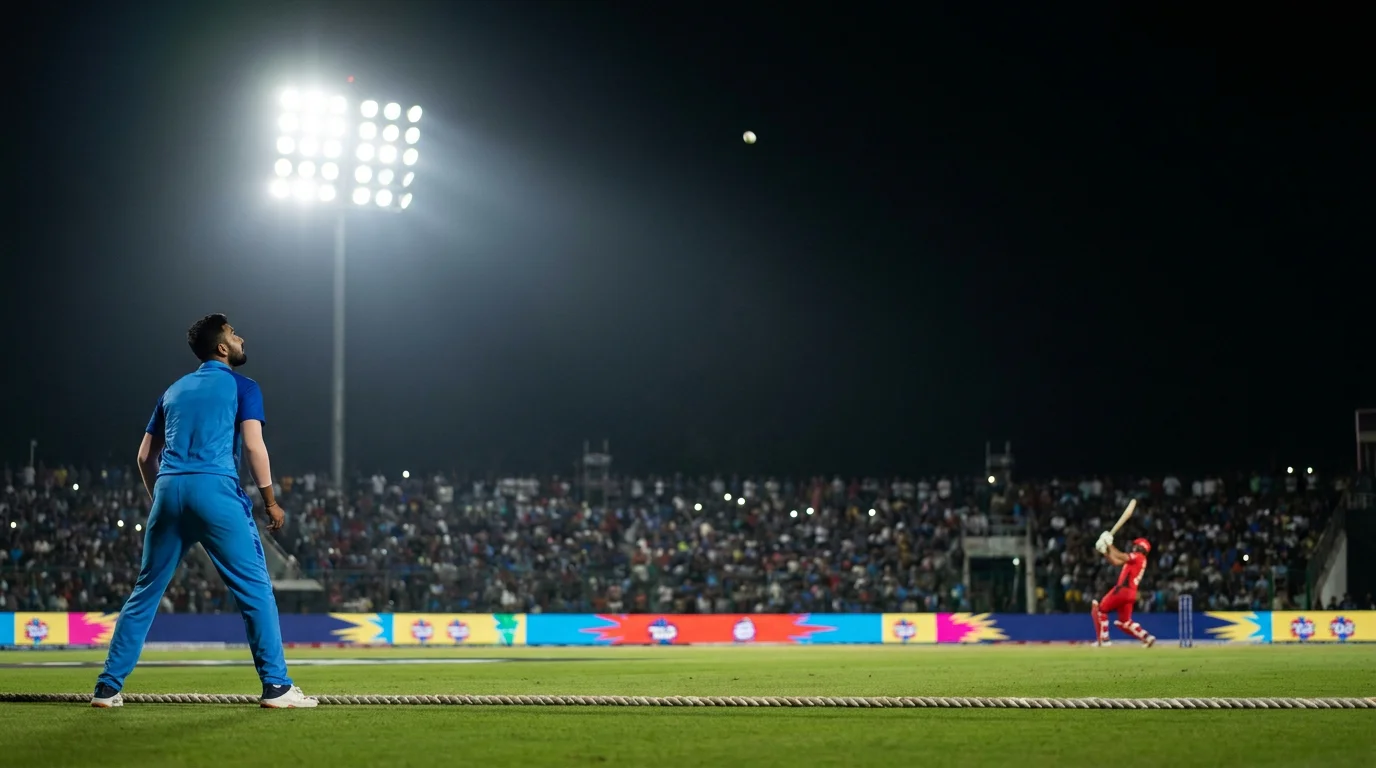
The Hundred’s hundred-ball-per-side format compresses everything further. Bowlers operate in sets of five or ten balls instead of overs, and the tactical decisions arrive at twice the rate. The pricing engine handles the mechanics, but the tactical-read window is correspondingly narrower — by the time you have read the situation, the situation has moved on. I treat The Hundred as a format for pattern observation, not for finding edge. The pace makes systematic in-play betting difficult unless you have a pre-trained read on the specific players in front of you.
One specific tactical read across all formats: power-hitters in low chases. When a team needs sixty off forty balls and the strike rotation has dried up, the captain’s choice between bringing a power-hitter up the order or waiting one more over often defines the match outcome. Reading that decision in real time, before the operator’s pricing engine reprices the match winner book, is the kind of edge that exists for an experienced viewer. It is also the kind of edge that disappears within a few balls, so the trade must be quick or not at all.
Partnership Arcs and How They Shape Live Prices
A partnership is a small story inside the larger match. It has a start, a middle, and an end, and the price action follows the arc.
The first ten balls of a new partnership carry the highest dismissal probability. Both batters are settling in. The bowler has a fresh batter to attack. The pricing engine knows this, and the next-wicket market reflects it. Punters who back the partnership runs market in the first ten balls are paying for the inflation in next-wicket pricing — the partnership over-line is priced low because the operator expects an early wicket.
If the partnership survives the first ten balls, the price arc shifts. The partnership over-line rises as the batters settle. The match-winner book shifts towards the batting side. The team total over-line climbs. This is the period where punters who backed the under at the start of the partnership see their position erode, and where backing the partnership runs over at value-pricing requires reading the partnership early.
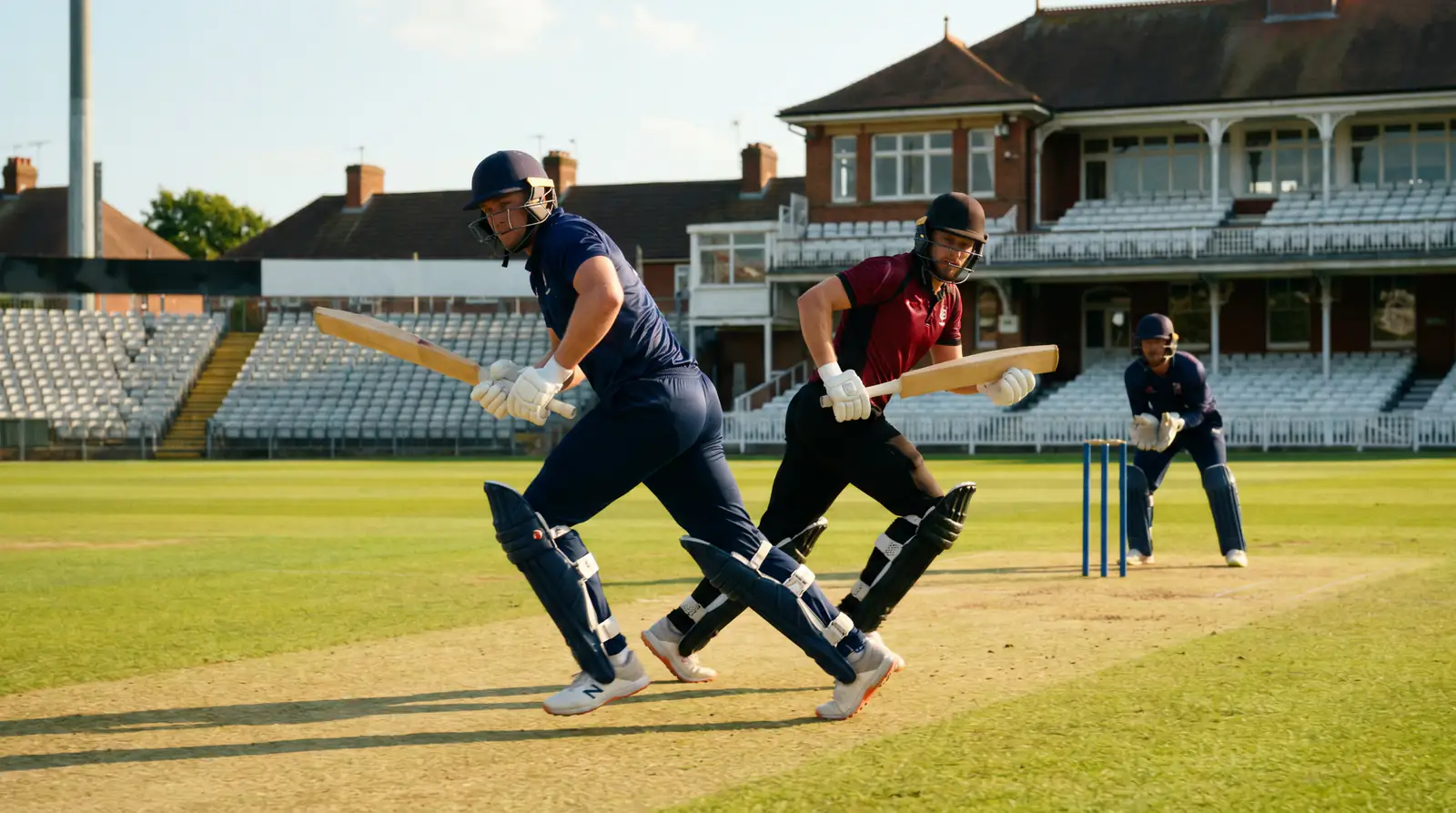
The end of a partnership is announced by the wicket. The pricing engine reprices everything within a few seconds. The team total over-line drops, the match-winner book shifts, the next-wicket clock resets to the incoming batter. Sharp punters who read partnerships closely will sometimes anticipate the wicket — a batter playing tentatively, a bowler getting into a rhythm — and position before the actual dismissal. That is the rare case where pre-emptive trading pays off, but it requires fast reading and faster execution.
The other partnership pattern to know is the second-wicket stand in Test cricket. Historically, the second-wicket stand has the highest average duration of any wicket pair, because the opener and the number three are usually the team’s most technical batters. Pricing engines reflect this with shorter dismissal probabilities for set second-wicket pairs. Punters who back the next-wicket market on a settled second-wicket stand are usually overpaying.
The first-wicket stand in T20s is the opposite. Openers in T20 are often top-order strikers with high dismissal rates relative to their strike rate. Pricing engines reflect this with shorter partnership over-lines. Backing the partnership over on a T20 opening stand is rarely value unless the matchup is unusually favourable.
Live Markets Around Rain Delays and Inspections
Rain stops cricket in ways football has never had to handle. The pricing engine has to decide whether to suspend, void, or reprice every active market the moment the umpires walk off, and the rules vary by format and by operator.
In Test cricket, a rain delay suspends most markets temporarily and reopens them at adjusted prices once play resumes. The match-winner book becomes more favourable for the draw with each lost session. The team total over-line drops because fewer overs will be bowled. Player markets — top batter, top bowler — usually pause and resume.
In limited-overs cricket, rain has a sharper effect because of the Duckworth-Lewis-Stern method. A rain interruption that does not abandon the match triggers a DLS recalculation when play resumes, and the new par-score and target reshape every market in the book. Match winner reprices against the DLS-adjusted target. Team total over-lines reprice to the new innings length. Powerplay markets are usually voided if the powerplay window is shortened by the interruption.
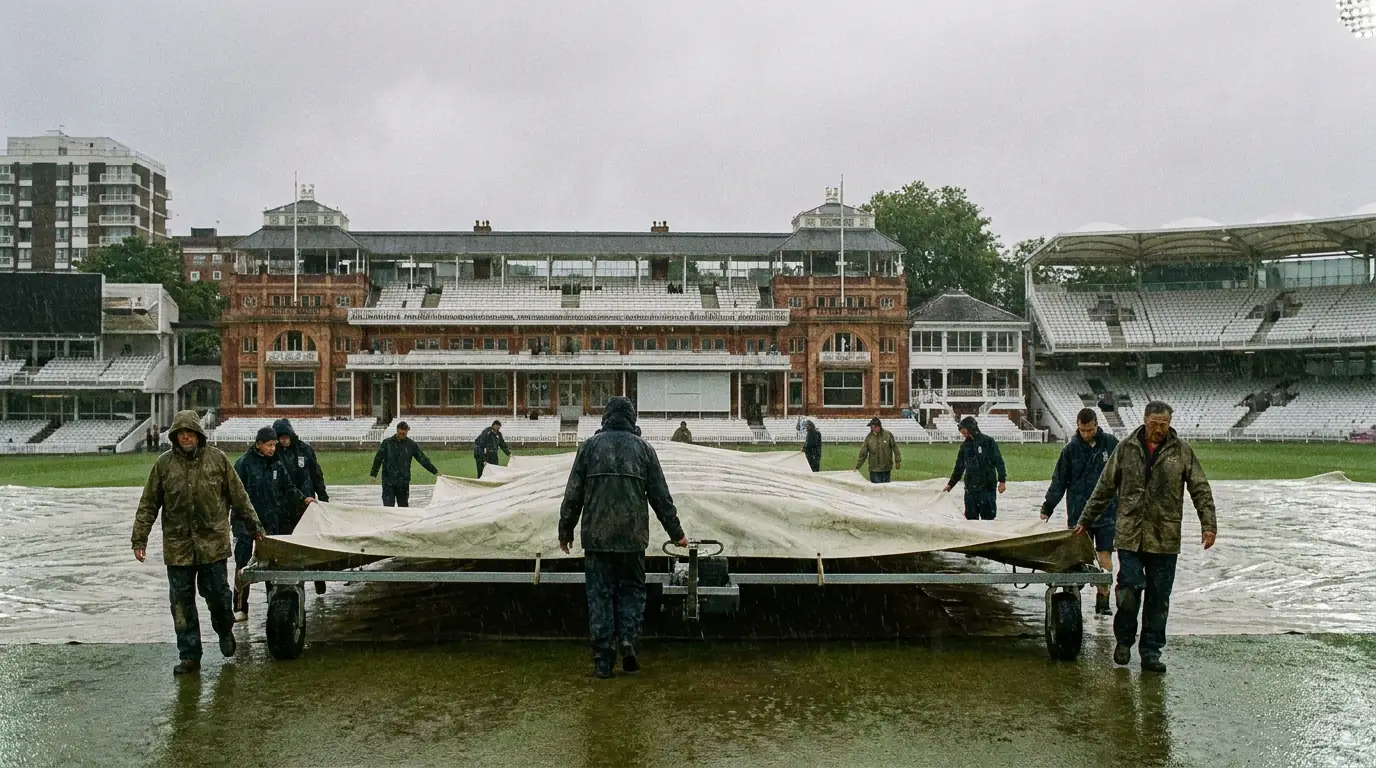
Pacers benefit specifically from rain conditions in ways the model has been slow to fully price. Historical analysis of Test matches at Edgbaston shows damp and overcast conditions increase the share of wickets taken by pace bowlers by roughly 15 percent compared with dry conditions. The implication for live betting is that during and immediately after rain, next-wicket and method-of-dismissal markets should tilt towards pace dismissals more than the live model often suggests. Operators have been improving on this — most have venue-specific overlays now — but on lower-tier fixtures the generic prior still dominates.
The Duckworth-Lewis-Stern recalculation itself is the area where in-play edge is most defensible, because the calculation is mechanical and a punter with a working DLS spreadsheet can run the new par-score faster than the model’s display refresh. The mechanics of those calculations and how they connect to live pricing are worth a dedicated treatment, which I cover in my piece on DLS method betting. For the purpose of this guide, the rule is straightforward: when the umpires walk off in a limited-overs match, the DLS calculation that resumes the match is also recalculating every price you are about to see.
Staking Discipline in a Live Cricket Environment
Live cricket betting is the easiest betting environment to lose money in, and the data backs that observation. Roughly 21.9 percent of UK adults aged 18 to 24 scored on the Problem Gambling Severity Index between January 2024 and January 2025, with 5.3 percent in the upper bracket. Live in-play betting is disproportionately represented in the activity profile of that group, primarily because the pace and the dopamine cycle align with impulsive staking.
The first discipline rule I apply to myself is unit sizing. Live stakes should be smaller than pre-match stakes — usually half the size or less — because the variance is higher and the information environment is noisier. A trader at a desk runs in-play positions at a fraction of his pre-match exposure for the same reason. Recreational punters often do the opposite, staking larger in-play because the action feels more compelling. That is the trap.
The second discipline rule is no chasing. A losing position pre-match does not become a winning position by adding live stakes on the same selection. Adding stake while losing compounds the variance against you. If your pre-match read was wrong, accept the loss and walk away from the match. The match is not the only match this week.
The third discipline rule is time-boxing. I set a clock for in-play sessions and walk away when it expires, regardless of the position. The reason is that in-play attention degrades faster than pre-match attention — the rate of decisions per minute is high, and the cognitive load accumulates. After roughly ninety minutes of intense in-play trading, my own decision quality drops measurably. I assume the same applies to most readers.
The fourth discipline rule is no live betting on unfamiliar fixtures. If you have not watched a team play before, you do not know the captain’s patterns, the bowlers’ rhythms, or the batters’ tendencies. The pricing engine knows them all from data. You are walking into a casino with one piece of information they have a thousand of. The fixtures that make sense for live betting are the ones you would have watched anyway, on competitions you understand.
The last rule is the operator-level rule: use the deposit and loss limits that every UK-licensed sportsbook is required to make available. Set them before you start the session, not during it. The discipline is in the pre-commitment, not in the willpower under pressure.
Live Cricket Betting Reader Questions
The four questions below cover what readers ask me most often about in-play cricket, in the order they tend to arrive. Each is a question of mechanics or of judgement, and each has a specific answer rather than a generic one.
How long is the typical delay between event and price update in live cricket?
The operator’s pricing engine usually updates within 5 to 15 seconds of a match event, depending on the speed of their data feed and the complexity of the market being repriced. Television and stream feeds delay viewers by anywhere from 5 to 30 seconds further, so by the time you see an event on screen, the operator’s price has often already moved or suspended. Trading against your stream is not a workable strategy — the operator sees the event before you do.
Why do live cricket markets sometimes suspend without a wicket falling?
Suspensions fire for several reasons besides wickets. Major events such as the end of a powerplay or a boundary six often trigger a brief pause while the pricing engine reprices dependent markets. Operators also suspend markets when their integrity desk flags unusual betting patterns, when the data feed lags, or when the trading desk needs to apply a manual override. A suspension does not always mean an event has occurred — sometimes the engine is just catching up.
Is it possible to win consistently on next-wicket markets?
Possible but rare. Next-wicket markets carry wider house margins than the underlying match-winner book, the variance per bet is high, and the information available to a punter is only marginally better than what the pricing engine already uses. Punters who win consistently on next-wicket markets tend to specialise in a small number of fixtures, build their own player-versus-bowler probability tables, and stake small enough to survive the inevitable losing runs. The market is not a casual edge.
How does the wagon-wheel inform live player markets?
The wagon-wheel is the diagram of where a batter has scored runs in his innings, divided into regions of the field. It informs live player markets when it identifies a clear pattern — a batter scoring 70 percent of his runs square of the wicket, or only scoring in front of square against pace. Operators’ pricing engines use wagon-wheel data for player props, but the data is typically aggregated across the innings rather than the most recent overs. A sharp punter watching the live wagon-wheel can sometimes spot a pattern shift — a batter changing his scoring zone after a field adjustment — faster than the engine’s aggregated view reflects it.
