
 Available in US
Content
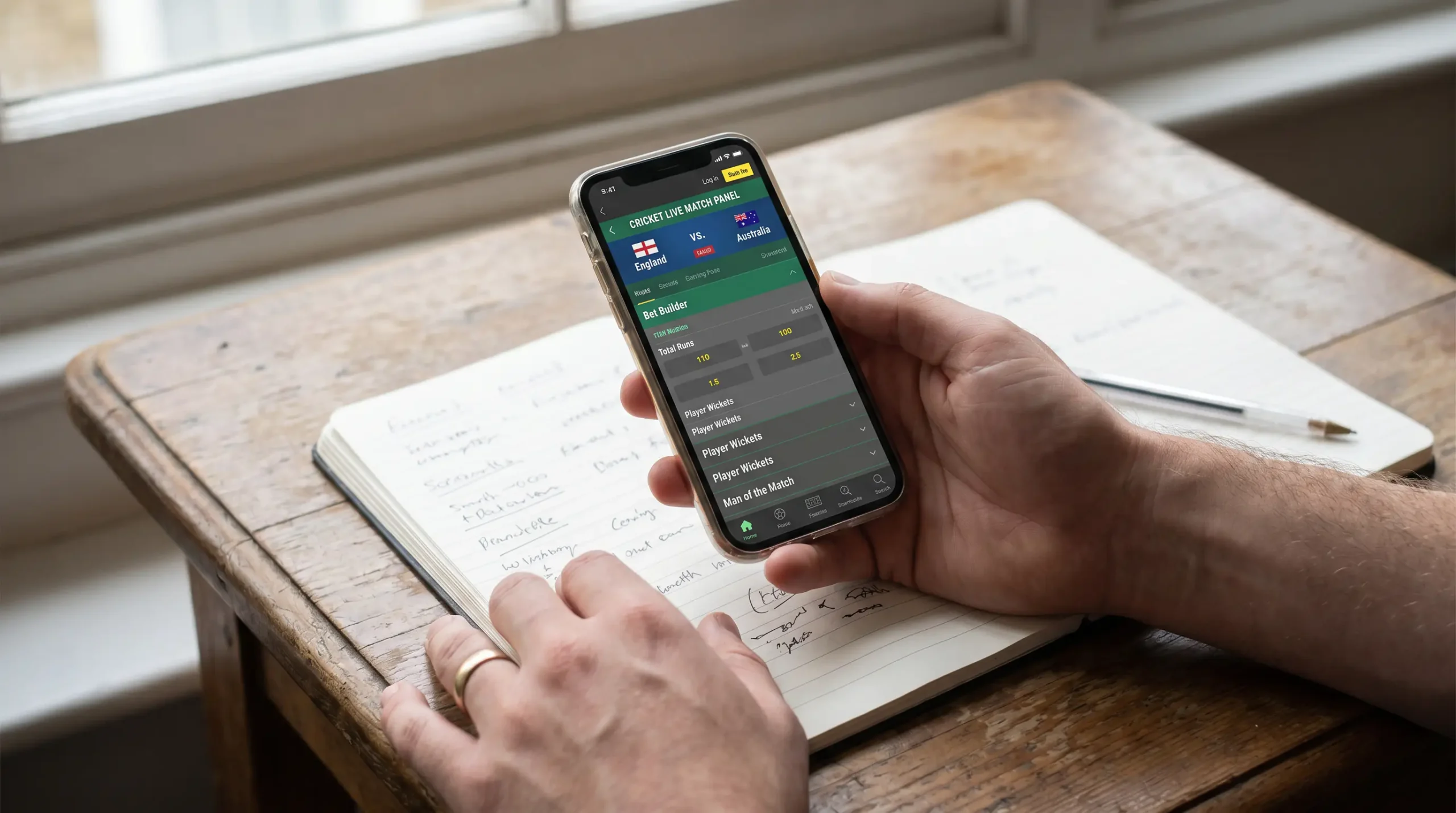
Where Bet Builder Sits
A friend of mine builds his bet builders the same way he orders pizza — he picks the toppings he likes, adds a few extras for fun, and hopes the result is edible. He loses, on average, on every one of them. The reason is not that bet builder is a bad product. It is that he is building it without understanding what the pricing engine does to his selections once he taps “combine.”
Bet builder is the most popular single-match product UK sportsbooks have launched in the past five years. It sits between accumulators, which combine separate matches, and single in-play bets, which sit on one outcome. It promises something genuinely useful — a way to express a detailed view of one cricket match in a single ticket. The trick is knowing what the engine is allowed to do, and what it is not.
What Legs UK Sportsbooks Allow
The standard cricket bet builder menu varies more than punters realise. The headline categories — match winner, top batter, top bowler, total runs, total wickets, method of dismissal — are universal. Below that, the selection narrows quickly. Some operators offer player runs bands, others offer player wickets bands, a smaller group offers both. Partnership runs as a bet builder leg is widely available for T20, less so for Test. Powerplay totals are available on T20 and ODI on every major UK book, but the upper and lower bands differ.

The unwritten rule is that the more granular the leg, the less likely it is to be combinable. Method of dismissal for a named batter is often a standalone single. Top batter for one team paired with top bowler for the other is almost always allowed. Top batter and top bowler from the same team is sometimes greyed out.
The reason is correlation. The pricing engine has to assume some legs are correlated — they tend to win or lose together — and others are not. A team to win combined with their top scorer to be man of the match is heavily correlated. A team to win combined with the opposing team’s top bowler to take three wickets is partially correlated. The engine has to model that, and where the correlation is too high or too uncertain, the engine refuses to price the combination.
How the Combined Price Is Calculated
The naive way to price a bet builder is to multiply the individual leg prices. That would only be correct if the legs were perfectly independent — and in cricket they almost never are. A team winning is correlated with their batters scoring more runs, their bowlers taking more wickets, the toss outcome being favourable, and a dozen other selections.

So the engine adjusts. For each pair of legs, the model estimates the joint probability — the chance both happen — and from there derives the implied price. The output is always lower than the naive multiplication would produce, sometimes substantially. A naive three-leg multiplier of 8.50 might land on the screen as 6.40 once correlation is properly priced.
The other adjustment is margin. Bookmaker margin compounds across legs in a bet builder more efficiently than in an accumulator, because the engine can lump the margin on the legs least visible to the punter. The headline favourite leg often carries something close to single-bet margin. The exotic prop legs carry more. The combined price reflects the weighted average.
UK cricket bet builders are popular partly because UK punters place close to 290 million online bets a month, and a meaningful share of those bets are single-match products of this kind. The volume tells the operators it is worth refining the engine continuously. The result for punters is that bet builder prices in 2026 are sharper than they were two years ago — and the easy edges that existed in 2021 are largely gone. Sportradar’s UFDS integrity monitoring picked up 56% more flagged matches in 2025 than 2024 — the rise from 436 to 682 reflects how tightly the underlying engines watch the markets that bet builders rely on.
When Legs Are Blocked
The “leg unavailable” greyed-out option is the most informative thing on a bet builder screen, and most punters ignore it. When a leg refuses to combine, the engine is telling me something specific.

Three common scenarios produce a blocked leg. The first is high positive correlation — combining team-to-win with their captain to be man of the match, for example. The engine cannot price that to a useful margin without either offering value the operator does not want to offer, or pricing it so short the punter would not bother. So it refuses.
The second is high negative correlation — combining team-to-win with the opposing team’s top batter to score eighty-plus runs, for instance. The two outcomes pull against each other strongly, and the joint probability is below the operator’s commercial threshold for offering a priced market.
The third is data gap. For markets where the bookmaker’s model has thin training data — particular county fixtures, women’s franchise matches at unfamiliar venues, qualifying tournament games — the engine sometimes refuses to compound legs because it cannot estimate the joint distribution to its required confidence.
The practical signal — if a leg I expected to add is blocked, I check the standalone market on each individual leg. The information about why the combination is blocked sometimes reveals a single-bet opportunity I had not noticed.
Sample Builders for Test, ODI and T20
The bet builders I find genuinely useful are format-specific. In a Test match, the combinations that hold up are team-to-win plus highest opening partnership over a banded total, or innings winner plus method of first dismissal. Both are legs where my pitch read and team-news read add value, and the correlation is manageable.

In an ODI, I lean towards team-to-win plus a powerplay total band plus a top batter selection. Three legs is enough to express a view; four starts to compound margin too aggressively for the value to hold.
In a T20, the bet builders I build most often combine team-to-win with the dew-side decision implied — meaning I pair the team I think benefits from batting second with a top batter selection from that team. Dew is the biggest single factor in T20 evening matches at certain venues — at the R. Premadasa Stadium in Colombo, dew in evening matches reduces spinner effectiveness by about 20% in the second innings — and a bet builder that expresses a coherent view about which side benefits is more likely to land than one assembled by toppings preference. The IPL audience of more than a billion in 2025 makes this format the most heavily traded for bet builders, and the prices reflect that — sharp but accessible. For the underlying logic of why method of dismissal markets behave differently from other cricket props, the method of dismissal markets guide covers the structural detail.
Building With a View, Not With Toppings
The bet builder that works is the one I can describe in a sentence before I open the screen. “This team wins because of dew, their top order scores most of the runs in the chase, and the first wicket falls early in the chase.” That is a coherent view, and the combination of legs that expresses it is what the engine prices. The bet builder that loses is the one assembled from whatever felt fun in the menu.

Why is a desired leg sometimes greyed out?
The pricing engine refuses combinations where the legs are too correlated, where joint probability cannot be confidently modelled, or where the data on the underlying market is too thin for the operator’s commercial threshold.
Are bet builders eligible for BOG?
No. Best Odds Guaranteed is a single-bet horse and greyhound promotion in most UK terms, and cricket bet builders are explicitly excluded from BOG eligibility under standard operator terms.
