
 Available in US
Content
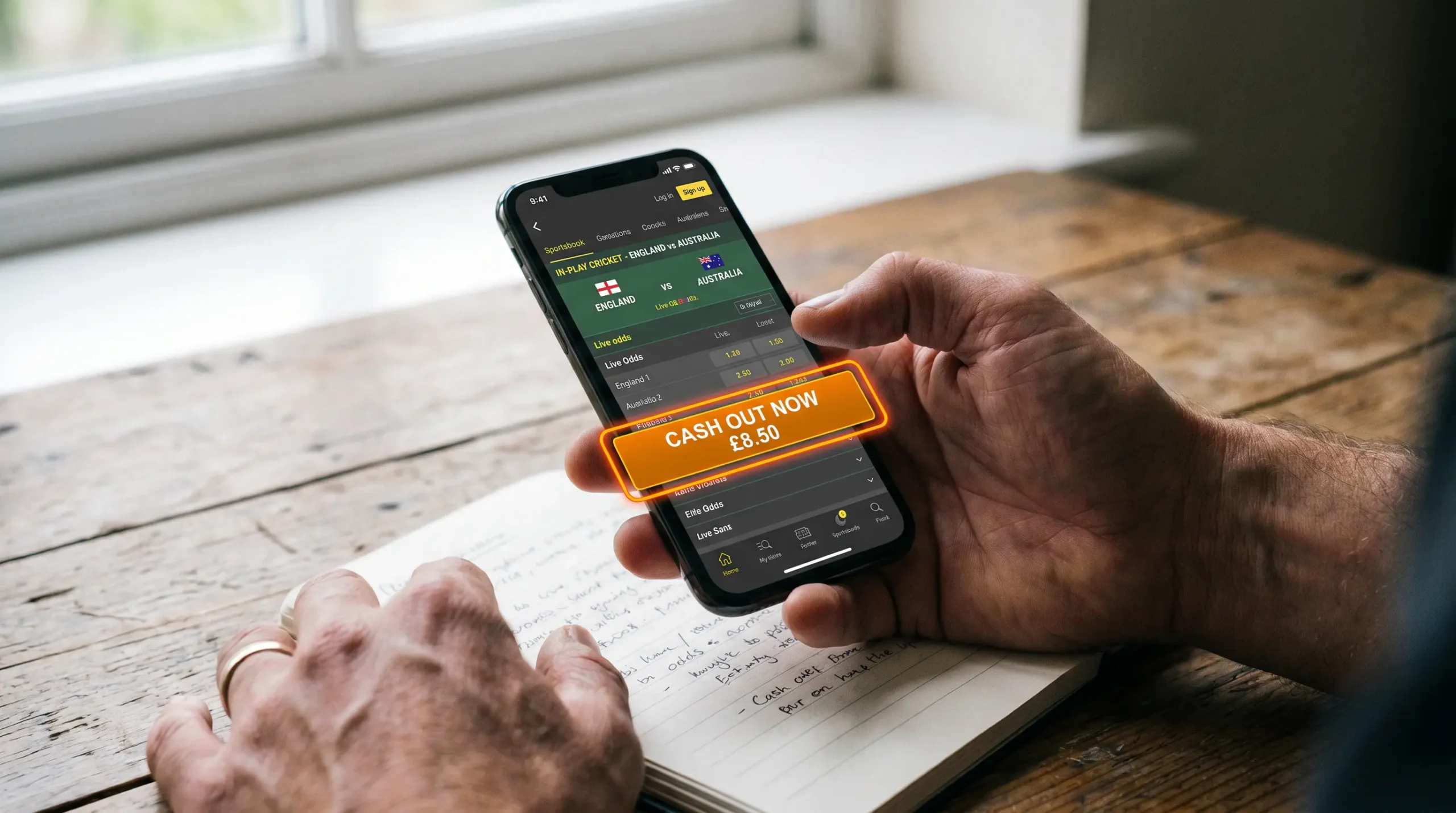
Why Cash Out Is Always Priced in the Sportsbook’s Favour
The first time I cashed out a winning cricket bet, I felt clever for about ninety seconds. Then I worked out what the implied probability of the offer was, compared it to the live odds on the same outcome, and realised I had just paid the sportsbook roughly four percent for the privilege of cooling my nerves. That is the trade every cash out involves, and the sooner a punter accepts it, the sooner they can use the tool sensibly.
Cash out is not a neutral mid-stream settlement. It is a counter-offer from the bookmaker, built on the live market price plus a margin. The headline number that flashes on the screen is real money — but it is never the mathematically fair value of the original bet. It cannot be, because the operator has to cover the spread on whichever side of the market they would have to lay off to close the position.
That structural fact does not make cash out bad. It makes it a paid service, and like any paid service, the question is whether the user is getting fair value for the fee.
How the Cash Out Offer Is Calculated
Picture an open bet of £20 at 4.00 on a team to win an ODI. Halfway through the chase, that team’s live price has shortened to 1.80. If I wanted to lay off the bet manually on an exchange, I would need to stake roughly £44.44 against them at 1.80, which would lock in a profit of £24.44 no matter what happened. That is the fair value of my position.
The sportsbook’s cash out engine runs the same calculation, then applies an internal margin — typically two to six percent on cricket markets, sometimes more on volatile in-play moments. The number that lands on my screen might be £23.10, or £22.50, or £21.80, depending on the operator and the moment.
The margin is not fixed. It widens around big swings: a wicket, a boundary, a dropped catch. The reason is straightforward — those are the seconds when the bookmaker’s own pricing model is least certain about the live price, so it builds in a buffer. If a punter hits cash out three balls after a wicket, the offer they see has more margin baked in than the offer they would have seen three balls earlier. The button works at any moment, but the implied cost of using it is not constant.
I now check the offer against the live odds before tapping. It takes ten seconds and tells me exactly what the trade costs.
Cricket-Specific Cash Out Behaviour
Cricket throws a particular wrinkle at cash out engines that football does not. Football has a clock that ticks at a predictable rate; cricket has overs that can take three minutes or twelve, depending on bowling changes, reviews, drinks breaks, and rain interruptions. The cash out price has to reprice across every one of those pauses, and the pause itself is when most disputes arise.
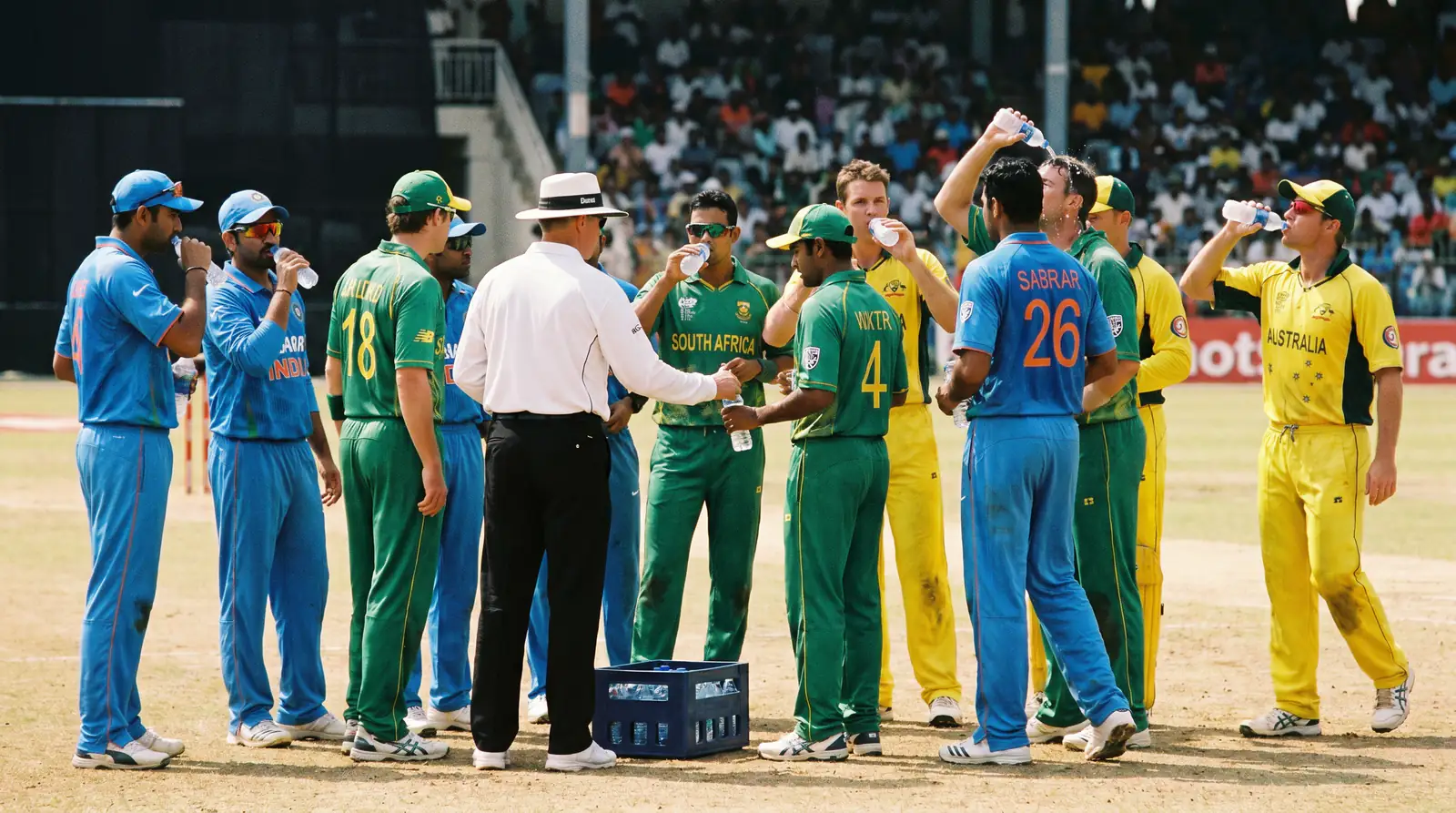
The IPL 2025 season — which drew more than a billion viewers and over 840 billion minutes of watch time, with digital consumption up 29% year on year — gave me a working laboratory for this. During almost every chase, the cash out value on my open team-win bets oscillated wildly during the drinks break in the second innings. Not because anything was happening on the field, but because the underlying model was repricing the par score curve while the broadcast cut to adverts. Twice I watched the offer drop by roughly twelve percent during the break, then recover most of the way once play resumed.
That happens because in-play volume thins during breaks. Fewer counter-bets means wider operator margins, and the cash out value reflects that immediately.
The practical lesson — never accept a cash out during a scheduled break unless the value is genuinely outstanding. Wait for the first ball of the next over. Liquidity returns within thirty seconds, and the offer almost always tightens.
The other cricket-specific factor is rain. As soon as the umpires confer about the light or covers come on, cash out availability often vanishes entirely. The bookmaker has effectively said: “I cannot price your position right now, and I am not going to guess.” Punters used to football’s continuous availability find this jarring, but it is the operator behaving responsibly rather than punitively.
Partial Cash Out and Hedging Logic
Partial cash out is the feature I use most often, and the one I see misused most often. The idea is simple — take out some of the stake, let the rest run. The execution is where punters lose value.

If I have £20 on a team at 4.00 and the live price has shortened to 1.80, a fifty percent partial cash out closes half the position at the offered price and leaves the other half on the original 4.00 line. That is a perfectly reasonable hedge — I lock in some profit and keep upside exposure if the team wins.
The mistake I see in punters’ forum screenshots is treating partial cash out as a way to “play with house money.” Mathematically, every pound the punter takes out is being paid back at the operator’s margin. The remaining stake is still exposed to the same probability curve. There is no risk-free position created by cashing out part of a bet — only a redistribution of the risk-reward ratio.
I use partial cash out for one purpose: when my view on the match has changed but I am not certain. If I still think the team wins but the chase is tighter than I expected, I might take twenty percent out and ride the rest. That converts a binary “all in” into a more nuanced position. It is not a profit guarantee — it is a way of expressing partial doubt.
When Cash Out Genuinely Helps and When It Hurts
Cash out earns its margin in two situations. The first is when a bet is going badly and the punter has identified that the underlying assumptions were wrong — wrong pitch read, wrong team-news read, wrong dew assumption. Taking forty percent of the stake back rather than losing the lot is a defensible decision, even after paying the margin. The alternative is watching £20 turn into zero.

The second is when an open bet is winning, the match is genuinely close, and the punter’s bankroll discipline matters more than the upside. Locking in a confirmed profit at a small cost is rational risk management, particularly for a punter whose stake represents a meaningful share of their monthly budget.
Cash out hurts when it becomes a habit. The market gives signals — green button is winning, red is losing — and the brain learns to tap green to confirm the dopamine hit. That is the behavioural trap operators rely on. With UK online bets running at roughly 290 million per month, the cumulative margin extracted through cash out across the industry is substantial, and a large share of it comes from punters cashing out winners they would have collected anyway.
The discipline I have settled on — only cash out when I can articulate, in one sentence, why my view on the match has changed. If the reason is “I am nervous,” the bet stays open. For deeper context on how stacked positions interact with cash out, the cricket accumulator mechanics guide covers the multi-leg case in detail.
The Question to Ask Before Tapping the Button
Every time the cash out button lights up, there is one question worth answering before the tap: “Would I place this bet, at these odds, with this stake, right now, if I had no open position?” If the answer is yes, the bet runs. If the answer is no, cash out is rational. Anything else is the bookmaker’s margin doing its work.
Why is cash out sometimes unavailable mid-over?
Cash out vanishes when the bookmaker’s live pricing model cannot confidently quote a number — usually during rain breaks, umpire reviews, or moments of unusual market volume. The operator is choosing not to guess rather than offering a wide spread that would feel punitive.
Does cash out preserve eligibility for Best Odds Guaranteed?
No. Cashing out closes the original bet at the offer price, which means it settles at that price rather than the starting price. Any Best Odds Guaranteed entitlement on the original wager is extinguished the moment cash out is accepted.
